
EC Fans vs AC Fans: Complete Comparison Guide for Industrial Cooling
Meta Description: Discover the key differences between EC fans and AC fans for industrial cooling applications. Learn which technology offers better energy efficiency, performance, and ROI for your facility.
EC Fans vs AC Fans: Complete Comparison Guide for Industrial Cooling
Introduction
When it comes to industrial cooling systems, the choice between EC (Electronically Commutated) fans and traditional AC (Alternating Current) fans can significantly impact your facility's energy consumption, operating costs, and cooling performance. With energy prices rising and sustainability becoming a priority, understanding the differences between these two technologies is more important than ever.
In this comprehensive guide, you'll discover the fundamental differences between EC and AC fans, their respective advantages and disadvantages, and most importantly, which technology is the right choice for your specific application. Whether you're upgrading existing cooling systems or designing new installations, this comparison will help you make an informed decision that balances performance, efficiency, and cost.
By the end of this article, you'll have a clear understanding of: - The technical differences between EC and AC fan technologies - Energy efficiency comparisons with real-world data - Total cost of ownership analysis - Application-specific recommendations - Future trends in industrial cooling
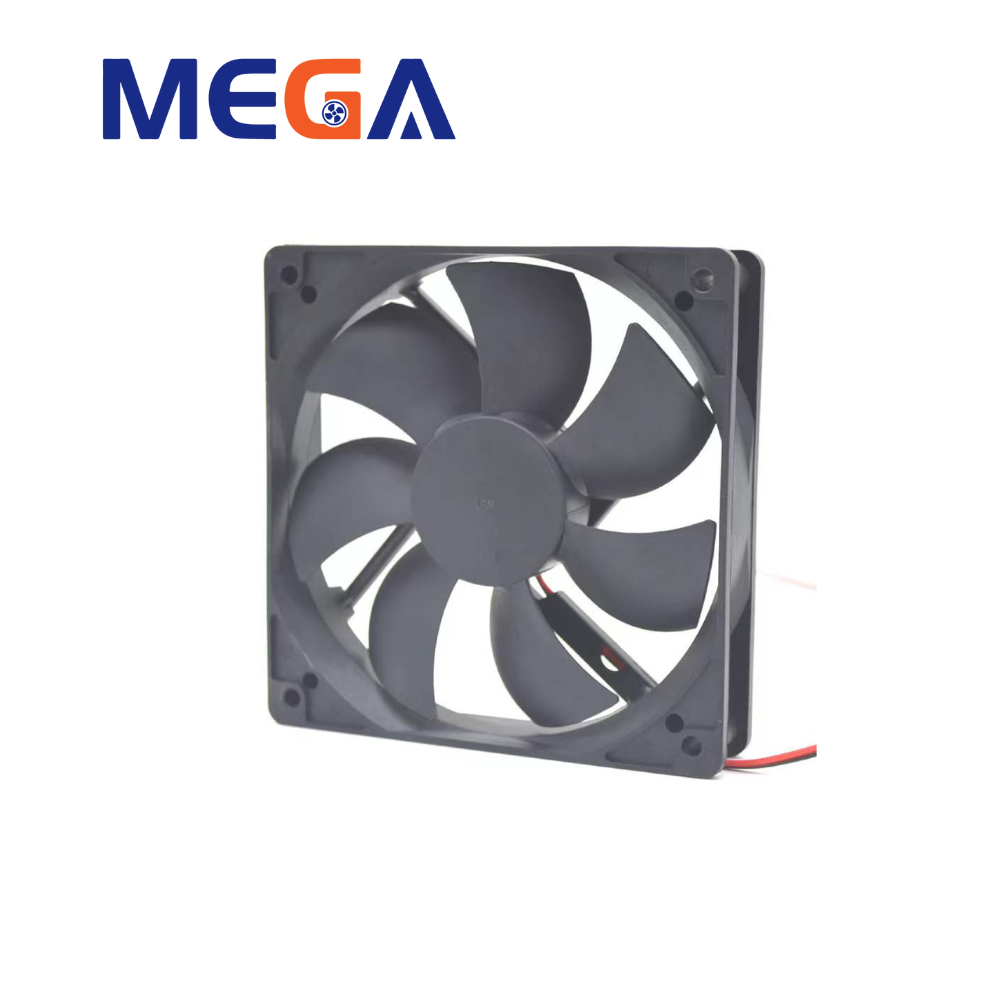 High-efficiency EC fan for industrial cooling applications
Understanding the Technology: How EC and AC Fans Work
AC Fans: The Traditional Approach
AC fans have been the industry standard for decades. They operate using alternating current from your facility's power supply, typically at 50Hz or 60Hz depending on your region. The motor speed is determined by the frequency of the AC power supply, which means AC fans generally run at a fixed speed unless controlled by external devices.
Key characteristics of AC fans: - Simple, robust motor design - Fixed speed operation (without additional controls) - Lower initial purchase cost - Widely available from multiple manufacturers - Proven reliability in industrial applications
However, this simplicity comes with limitations. AC fans typically operate at full speed even when full cooling capacity isn't required, leading to wasted energy and higher operating costs.
EC Fans: The Modern Solution
EC fans combine AC and DC technologies to deliver superior performance and efficiency. The "EC" stands for Electronically Commutated, which means the motor uses electronic commutation instead of mechanical brushes. This design incorporates a permanent magnet rotor and an electronic controller that converts AC input to DC for the motor.
Key characteristics of EC fans: - Built-in variable speed control (0-100%) - Higher motor efficiency (up to 90%+) - Intelligent control capabilities - Compact motor design - Longer motor life due to brushless design
The integrated electronics allow EC fans to adjust speed precisely based on cooling demand, making them significantly more efficient in variable load applications.
Energy Efficiency Comparison: The Numbers That Matter
Efficiency Ratings
The most significant difference between EC and AC fans lies in their energy efficiency. Here's a direct comparison:
| Metric | AC Fans | EC Fans | Difference |
|---|---|---|---|
| Motor Efficiency | 60-70% | 85-95% | +25-35% |
| Power Factor | 0.7-0.8 | 0.95-0.99 | +15-29% |
| Speed Control Efficiency | N/A (requires VFD) | Built-in | Significant |
| Part-Load Efficiency | Poor | Excellent | Critical |
Real-World Energy Savings
Let's examine a practical example: A data center cooling application requiring 10,000 CFM of airflow.
Scenario: Cooling system operates 8,760 hours per year with variable load profile: - 20% of time at 100% load - 30% of time at 75% load - 40% of time at 50% load - 10% of time at 25% load
AC Fan System (with VFD): - Annual energy consumption: ~45,000 kWh - Energy cost (@ $0.12/kWh): $5,400/year
EC Fan System: - Annual energy consumption: ~31,500 kWh - Energy cost (@ $0.12/kWh): $3,780/year
Annual Savings: $1,620 per fan system (30% reduction)
Payback Period Analysis
While EC fans have a higher upfront cost, the energy savings typically deliver a fast return on investment:
| System Type | Initial Cost | Annual Operating Cost | 5-Year TCO | Payback Period |
|---|---|---|---|---|
| AC Fan + VFD | $1,500 | $5,400 | $28,500 | N/A |
| EC Fan | $2,200 | $3,780 | $21,100 | 2.5 years |
5-year total savings: $7,400 per fan system
Performance Comparison: Beyond Energy Efficiency
Airflow Control Precision
One of EC fans' most significant advantages is their precise speed control capabilities.
AC Fans: - Speed control requires external VFD (variable frequency drive) - VFD adds cost, complexity, and potential failure points - Speed range typically limited to 30-100% - Harmonic distortion issues may require filters - Response time to load changes: 2-5 seconds
EC Fans: - Built-in 0-100% speed control as standard - 0-10V, PWM, or Modbus control options - No external controller required - Clean power factor throughout speed range - Response time to load changes: <1 second
This precision translates to better temperature control, reduced temperature swings, and improved process stability in industrial applications.
Noise Levels
For facilities where noise is a concern, EC fans offer significant advantages:
- AC Fans: 60-70 dB(A) at full speed
- EC Fans: 45-55 dB(A) at typical operating speeds (50-70%)
The ability to run EC fans at lower speeds during partial load conditions can reduce noise levels by 10-20 dB(A), creating a better working environment.
Motor Life and Reliability
Both technologies are reliable, but EC fans have advantages:
AC Fans: - Typical motor life: 40,000-60,000 hours - Bearings are primary failure point - VFDs add potential failure points - Starting torque can stress components
EC Fans: - Typical motor life: 60,000-80,000 hours - Brushless design eliminates brush wear - Soft-start capability extends bearing life - Integrated electronics protected from environment
Application-Specific Recommendations
Data Center Cooling
Recommendation: EC Fans
Data centers operate with highly variable loads, making EC fans the clear choice. The precise speed control matches cooling output to IT load, reducing energy waste. Many data centers report 20-40% energy savings after upgrading to EC fans.
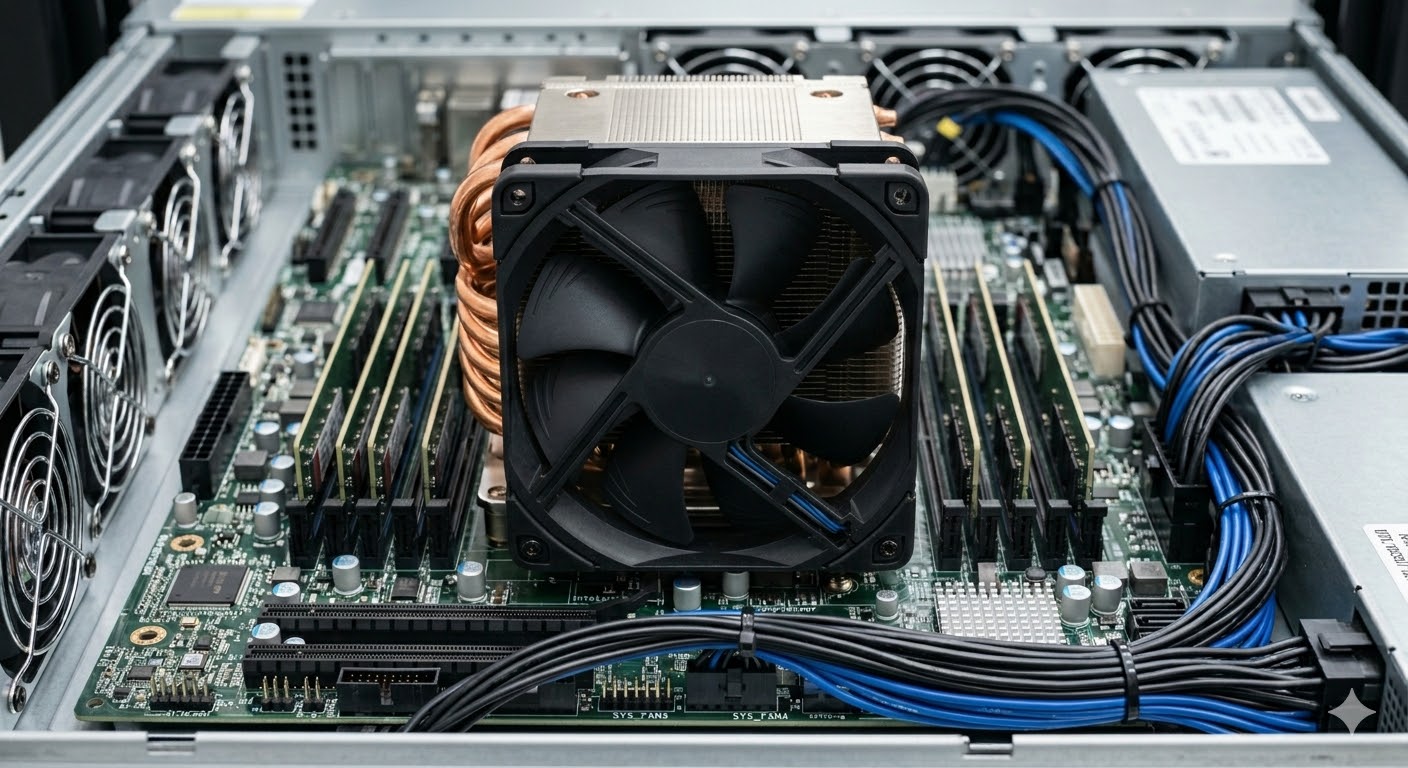 EC fans in data center server cooling application
Key benefits: - Variable load optimization - Hot aisle/cold aisle containment compatibility - Redundancy through intelligent control - Lower PUE (Power Usage Effectiveness)
Industrial Process Cooling
Recommendation: Depends on Application
For continuous, high-load processes, AC fans may be sufficient and cost-effective. However, for batch processes or variable production rates, EC fans deliver superior efficiency.
Choose AC fans for: - Continuous 24/7 operation at full load - Simple, fixed cooling requirements - Budget-constrained projects
Choose EC fans for: - Variable production schedules - Precise temperature control requirements - Energy cost reduction initiatives
HVAC Systems
Recommendation: EC Fans
Commercial HVAC systems benefit significantly from EC technology. The ability to modulate airflow based on occupancy, time of day, and temperature requirements delivers substantial energy savings.
Typical savings: 30-50% reduction in fan energy consumption
Telecommunications Cooling
Recommendation: EC Fans
Telecom equipment cooling requires precise temperature control and high reliability. EC fans' intelligent control and monitoring capabilities make them ideal for remote sites and critical infrastructure.
Installation and Maintenance Considerations
Installation Complexity
AC Fans: - Simple motor connections - VFD installation requires additional space and wiring - May require harmonic filters for large installations - EMC considerations with VFDs
EC Fans: - Simple power and control wiring - No external speed controller needed - Built-in EMC compliance - Compact installation footprint
Maintenance Requirements
AC Fans: - Regular bearing lubrication (some models) - VFD maintenance and firmware updates - Filter cleaning on VFD enclosures - Periodic thermal imaging of connections
EC Fans: - Bearing inspection at scheduled intervals - Control signal verification - Firmware updates (for advanced models) - Generally lower maintenance requirements
Future Trends: Where Is Industrial Cooling Heading?
Smart Building Integration
EC fans are inherently compatible with smart building management systems (BMS). Their digital control capabilities enable: - Real-time monitoring and diagnostics - Predictive maintenance scheduling - Automated optimization algorithms - Cloud-based performance tracking
Sustainability and Regulations
Increasing energy efficiency regulations are favoring EC technology: - EU Ecodesign Directive requirements - US Department of Energy efficiency standards - Carbon reduction mandates in many jurisdictions - LEED and other green building certifications
Many facilities are finding that EC fan upgrades contribute significantly to sustainability goals and regulatory compliance.
Edge Computing and Micro Data Centers
The growth of edge computing creates demand for compact, efficient cooling solutions. EC fans' small footprint and high efficiency make them ideal for: - Micro data centers - Edge computing nodes - 5G base stations - IoT infrastructure
Conclusion: Making the Right Choice
The choice between EC and AC fans ultimately depends on your specific application, budget, and long-term objectives. Here's a quick decision guide:
Choose EC fans when: - Energy costs are a significant concern - Cooling loads vary throughout the day/year - Precise temperature control is required - Smart building integration is planned - Long-term total cost of ownership matters - Sustainability is a priority
Choose AC fans when: - Initial budget is severely constrained - Cooling operates at constant full load - Simple installation is preferred - Existing infrastructure favors AC technology - Application has short operational life
For most modern industrial cooling applications, EC fans represent the better long-term investment. While the upfront cost is higher, the energy savings, operational flexibility, and future-proofing typically deliver superior value over the system's lifecycle.
Key Takeaways: 1. EC fans offer 25-35% higher motor efficiency than AC fans 2. Variable load applications see the greatest benefit from EC technology 3. Typical payback period for EC fan upgrades is 2-3 years 4. EC fans provide superior control, reliability, and sustainability 5. Future regulations and smart building trends favor EC technology
FAQ Section
Q: What is the main difference between EC and AC fans? A: EC fans use electronically commutated motors with built-in variable speed control, while AC fans use traditional induction motors that run at fixed speed unless controlled by an external VFD. EC fans are 25-35% more efficient.
Q: How much energy can I save by switching to EC fans? A: Typical energy savings range from 20-40% compared to AC fans with VFDs, and up to 50-70% compared to fixed-speed AC fans. Actual savings depend on your load profile and operating hours.
Q: Are EC fans more expensive than AC fans? A: Yes, EC fans have a higher initial purchase price (typically 30-50% more than AC fans). However, the energy savings usually deliver a payback within 2-3 years, and the total cost of ownership over 5-10 years is significantly lower.
Q: Can EC fans be used in hazardous locations? A: Yes, many manufacturers offer EC fans with hazardous location ratings (ATEX, IECEx). However, the integrated electronics require appropriate certification for explosive atmospheres.
Q: Do EC fans require special maintenance? A: No, EC fans typically require less maintenance than AC fans. The brushless motor design eliminates brush wear, and there's no external VFD to maintain. Regular bearing inspection and control signal verification are the primary maintenance tasks.
About MEGA Tech
MEGA Tech is a leading manufacturer of high-performance cooling solutions for data centers, industrial facilities, and telecommunications infrastructure. With over 15 years of experience in thermal management, we provide customized EC fan solutions that deliver maximum efficiency, reliability, and value for your cooling applications.
Contact us to discuss how EC fan technology can reduce your energy costs and improve cooling performance.
Published: April 26, 2026
Category: Industrial Cooling
Tags: EC fans, AC fans, industrial cooling, energy efficiency, data center cooling, HVAC
Need help selecting the right cooling solution for your facility? Contact MEGA Tech's engineering team for a free consultation and energy savings analysis.
💬 Discussions & Feedback
Feel free to ask questions, share your thoughts, or provide feedback in the comments below. If you have any questions about our products or suggestions, please let us know!