
EV Charger Cooling Fan: Complete Thermal Management Guide
EV Charger Cooling Fan: Complete Thermal Management Guide for Electric Vehicle Charging Stations
Complete Guide to Thermal Management for EV Chargers | MEGA Tech Solutions
📋 Excerpt
Electric vehicle charging stations generate significant heat during operation, making effective thermal management critical for reliability and safety. This comprehensive guide explores the critical role of DC cooling fans in EV charger applications, with a focus on MEGA's 6010 bracket cooling fan series. Learn how to select the right fan specifications, leverage custom bracket designs, and implement optimized cooling strategies that ensure long-term performance.
Table of Contents
- Introduction to EV Charger Thermal Challenges
- Why Choose MEGA Tech for EV Charger Cooling Solutions
- 6010 Bracket Cooling Fan: The Ideal Choice for Compact EV Chargers
- Custom Bracket Designs for EV Charger Applications
- Selecting the Right Fan Specifications for Your EV Charger
- Integration and Optimization Strategies
- Why Indian Leading EV Charger Manufacturers Trust MEGA Tech
- Future Trends in EV Charger Thermal Management
- Getting Started with MEGA Tech
- Conclusion
Chapter 1: Introduction to EV Charger Thermal Challenges
Electric vehicle charging infrastructure is experiencing unprecedented growth across India, driven by government initiatives, environmental awareness, and increasing consumer adoption. However, with this rapid expansion comes a critical engineering challenge: effective thermal management. As charging stations evolve to deliver faster charging rates—ranging from 3.3kW AC chargers to 350kW DC fast chargers—the heat generation within power electronics components increases dramatically, making reliable cooling systems indispensable.
Furthermore, the importance of thermal management extends beyond just operational efficiency; it directly impacts equipment reliability, user safety, and long-term performance. A single overheating event can lead to component degradation, reduced charging efficiency, or even catastrophic failure, resulting in costly downtime and potential safety hazards. Consequently, selecting the right cooling solution is not merely a design consideration—it's a fundamental requirement for successful EV charger deployment.
1.1 The Rise of Electric Vehicle Charging Infrastructure in India
India's electric vehicle market is witnessing exponential growth, with projections indicating that EV sales could reach 30% of total vehicle sales by 2030. This surge has catalyzed a parallel expansion in charging infrastructure, with major players like Hero Electric, Tata Power, and emerging companies rapidly deploying charging networks across urban centers, highways, and rural areas.
Moreover, the Indian government's FAME (Faster Adoption and Manufacturing of Electric Vehicles) scheme has allocated substantial funding for charging infrastructure development, creating significant opportunities for EV charger manufacturers. Leading companies such as Hero, Dhoot, and ADOR Power are aggressively expanding their product portfolios, developing innovative AC and DC charging solutions to meet diverse customer needs—from residential wallboxes to commercial fleet charging stations.
Nevertheless, this rapid deployment pace creates immense pressure on engineering teams to deliver reliable, cost-effective solutions quickly. The thermal management system, often an afterthought in early designs, has emerged as a critical differentiator, separating successful products from those plagued by reliability issues and customer complaints.
1.2 Understanding Heat Sources in EV Chargers
To design an effective cooling solution, we must first understand where and how heat is generated in EV chargers. The primary heat sources can be categorized into two groups: power electronics and magnetics.
Power Electronics Heat Generation
- MOSFETs and IGBTs: Switching currents at 20kHz-100kHz frequencies, experiencing conduction losses (I²R) and switching losses, collectively generating substantial heat
- Diode Rectifiers: Producing significant heat during AC-to-DC conversion, particularly in high-power applications where current levels exceed 100A
- Control Circuits: Microcontrollers, gate drivers, communication modules, and power supply ICs generating heat at lower magnitudes but with strict operating temperature limits (85°C ambient maximum)
Magnetics and Passive Components
- Transformers and Inductors: Generating heat through core losses (hysteresis and eddy currents) and copper losses (I²R losses in windings)
- Capacitors: Aluminum electrolytic capacitors experiencing temperature stress that accelerates aging—operating at elevated temperatures can halve lifespan for every 10°C increase (Arrhenius equation)
1.3 The Critical Role of Cooling Fans for Reliability and Safety
The consequences of inadequate cooling in EV chargers are severe and multifaceted, affecting both technical performance and business viability.
| Impact Area | Consequences of Inadequate Cooling |
|---|---|
| Component Degradation | Accelerated component aging, reduced charging efficiency, positive feedback loops (thermal runaway) |
| Safety Hazards | Burn hazards for users, increased fire risk, failure to meet IEC 61851 and UL 2202 safety standards |
| Premature Failure | Increased warranty claims, higher after-sales support costs, reputational damage, reduced customer trust |
Chapter 2: Why Choose MEGA Tech for EV Charger Cooling Solutions
Since our establishment in 2008, MEGA Tech has evolved into a trusted partner for thermal management solutions across diverse industries, including automotive, industrial, medical, and consumer electronics. Our 20+ years of experience manufacturing high-performance ball bearing and sleeve AC/DC axial fans, blowers, frameless fans, and centrifugal fans positions us uniquely to address the complex thermal challenges facing today's EV charger manufacturers.
2.1 MEGA Tech's 20+ Years of Expertise in Industrial Cooling
MEGA Tech's mission began in 2008 with a simple goal: to provide reliable, high-performance cooling solutions that help equipment manufacturers optimize thermal management without compromising on quality or affordability. Over the past two decades, we have refined our manufacturing processes, advanced our product designs, and cultivated technical expertise through thousands of successful projects across automotive, industrial automation, medical devices, and consumer electronics sectors.
For instance, in the automotive sector, we have supplied cooling fans for engine control modules, infotainment systems, and power electronics in both conventional and hybrid vehicles. This experience directly translates to EV charger applications, where similar thermal challenges exist: high power density, constrained space, demanding reliability requirements, and wide temperature operating ranges.
2.2 Cost-Effective Alternatives to Premium Brands
A common challenge faced by Indian EV charger manufacturers is the cost pressure from premium-brand cooling fans with correspondingly premium price tags. MEGA Tech delivers comparable—in many cases superior—performance at significantly lower costs through:
- Optimized Manufacturing: Our two factories in Shenzhen leverage China's mature supply chain and manufacturing ecosystem
- Vertical Integration: We manage the entire production process in-house
- Scale Efficiency: With annual production volumes exceeding 5 million units, we achieve economies of scale
2.3 Fully Customized Solutions Tailored to Your Needs
Every EV charger design presents unique thermal management challenges. MEGA Tech's engineering team works closely with customers from the initial concept phase through mass production, developing customized cooling solutions that precisely match their requirements.
Custom Capabilities Include:
- Custom Bracket Design: I-type, L-type, C-type, U-type, or completely novel configurations
- Performance Customization: Adjusting impeller blade geometry, motor winding specifications, control circuitry
- Material and Finish Options: Corrosion-resistant materials, EMI/RFI shielding, flame-retardant plastics
- Quality Assurance: Comprehensive testing including RoHS, CE, UL/cULus, IP rating verification
2.4 Supporting Startups and Innovation in EV Sector
MEGA Tech has a particular affinity for emerging companies disrupting traditional industries. We recognize that entrepreneurs face unique challenges: limited budgets, tight timelines, aggressive performance targets.
Startup-Friendly Features:
- Flexible minimum order quantities (MOQ as low as 50-200 units)
- Free sample units for evaluation purposes
- Rapid prototyping and iteration (within weeks, not months)
- Technical education and support (CFD simulation guidance, installation best practices)
- Funding and pitch support (reference contacts, testimonials for investor pitches)
Chapter 3: 6010 Bracket Cooling Fan: The Ideal Choice for Compact EV Chargers
The 6010 bracket cooling fan—referring to 60mm frame size with 10mm thickness—represents an optimal form factor for many EV charger applications, particularly in compact AC chargers (7.4kW-22kW) and lower-power DC chargers (up to 50kW) where space constraints, power efficiency, and noise considerations are critical design parameters.
3.1 Technical Specifications and Performance Data
MEGA Tech's MG6010 series encompasses a range of performance variants to accommodate diverse EV charger applications.
| Model | Voltage | Speed (RPM) | Airflow (CFM) | Static Pressure (mmH₂O) | Noise (dB-A) | Current (A) | Power (W) |
|---|---|---|---|---|---|---|---|
| MG6010L05X | 5V | 3000 | 4.1 | 3.2 | 25 | 0.08 | 0.40 |
| MG6010M05X | 5V | 4000 | 5.7 | 4.5 | 28 | 0.12 | 0.60 |
| MG6010H05X | 5V | 5000 | 7.4 | 5.8 | 32 | 0.16 | 0.80 |
| MG6010L12X | 12V | 3000 | 4.1 | 3.2 | 25 | 0.04 | 0.48 |
| MG6010M12X | 12V | 4000 | 5.7 | 4.5 | 28 | 0.06 | 0.72 |
| MG6010H12X | 12V | 5000 | 7.4 | 5.8 | 32 | 0.09 | 1.08 |
Bearing Options for Reliability:
| Bearing Type | Expected Lifespan | Noise Level | Best Applications |
|---|---|---|---|
| Sleeve (S) | 30,000 hours @ 40°C | Lowest | Indoor residential chargers |
| Ball (B) | 50,000 hours @ 40°C | Low-Medium | Commercial chargers, 24/7 operation |
| Hydromatic (Y) | 40,000 hours @ 40°C | Low | Balanced cost and reliability |
3.2 Why 60mm×10mm Size Is Perfect for EV Chargers
The 6010 form factor offers several distinct advantages:
- Space Efficiency: Compact enough to fit within most charger enclosures without dominating internal volume
- Airflow-to-Volume Ratio: Excellent airflow-to-volume ratio—60mm fans provide 5.7-7.4 CFM while consuming minimal volume
- Versatility in Mounting: Can be configured for I-type straight mount, L-type corner mount, C-type wraparound mount, or custom angles (0°, 15°, 30°, 45°)
- Power Consumption: Consumes only 0.48-2.4W depending on speed and load, minimizing parasitic losses
MG6010 Dimensions:
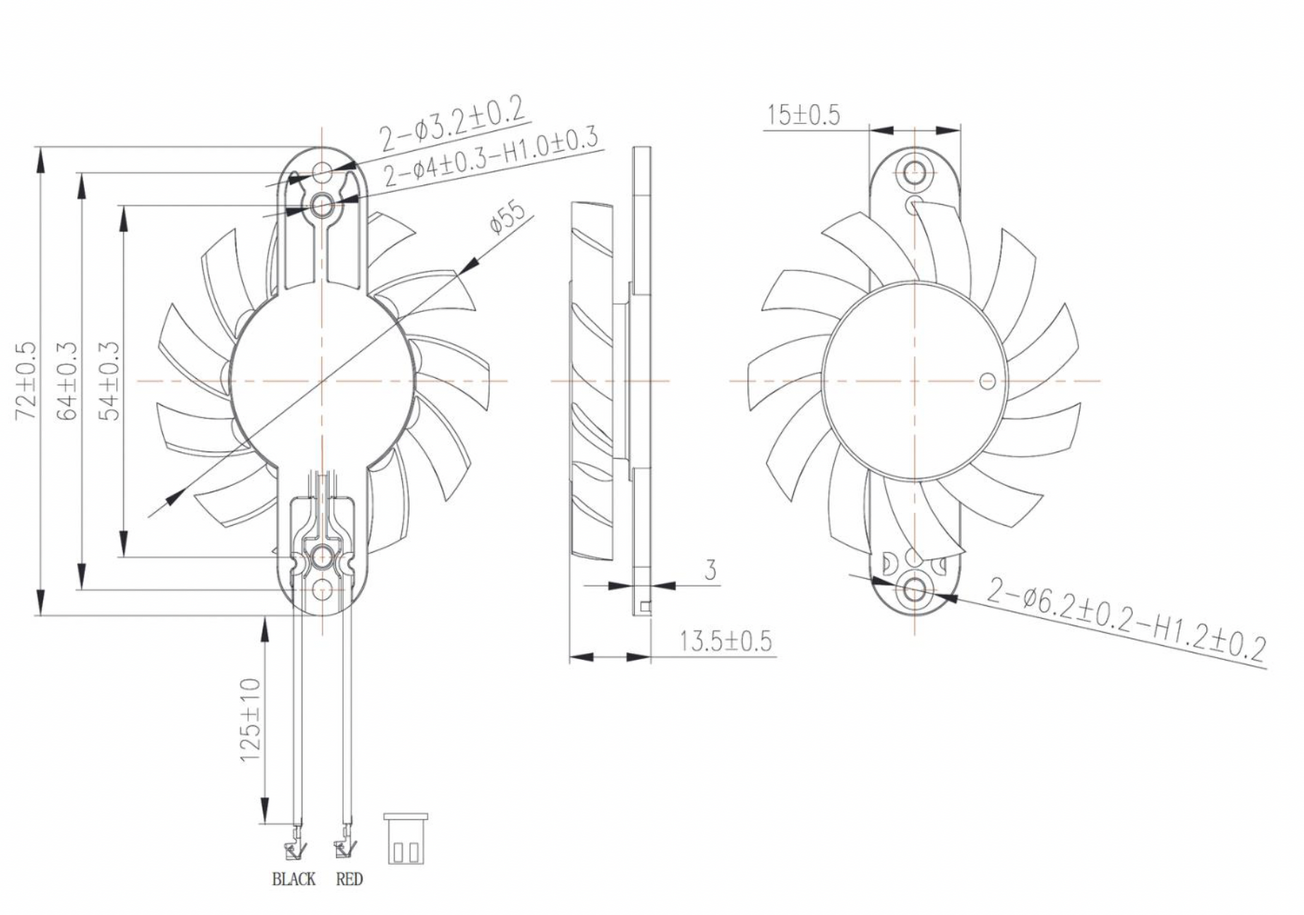
Figure 1: MG6010 bracket cooling fan dimensions (60mm×60mm×10mm) showing standard mounting hole configuration for easy integration into EV charger enclosures.
3.3 I-Type Bracket Design for Easy Installation
The I-type bracket—MEGA's standard configuration for 6010 fans—provides versatile mounting solutions for compact cooling applications.
Design Features: - Standardized mounting holes with 47.5mm pitch (industry standard) - Reinforced mounting points for vibration resistance - Self-aligning design eliminates installation errors - Electrical isolation for safety in high-voltage enclosures
Installation Advantages: - Tool-less assembly options available - Reduced assembly time (seconds vs. minutes for custom brackets) - Easy field replacement (no special training required)
I-Type Bracket Installation Guide:
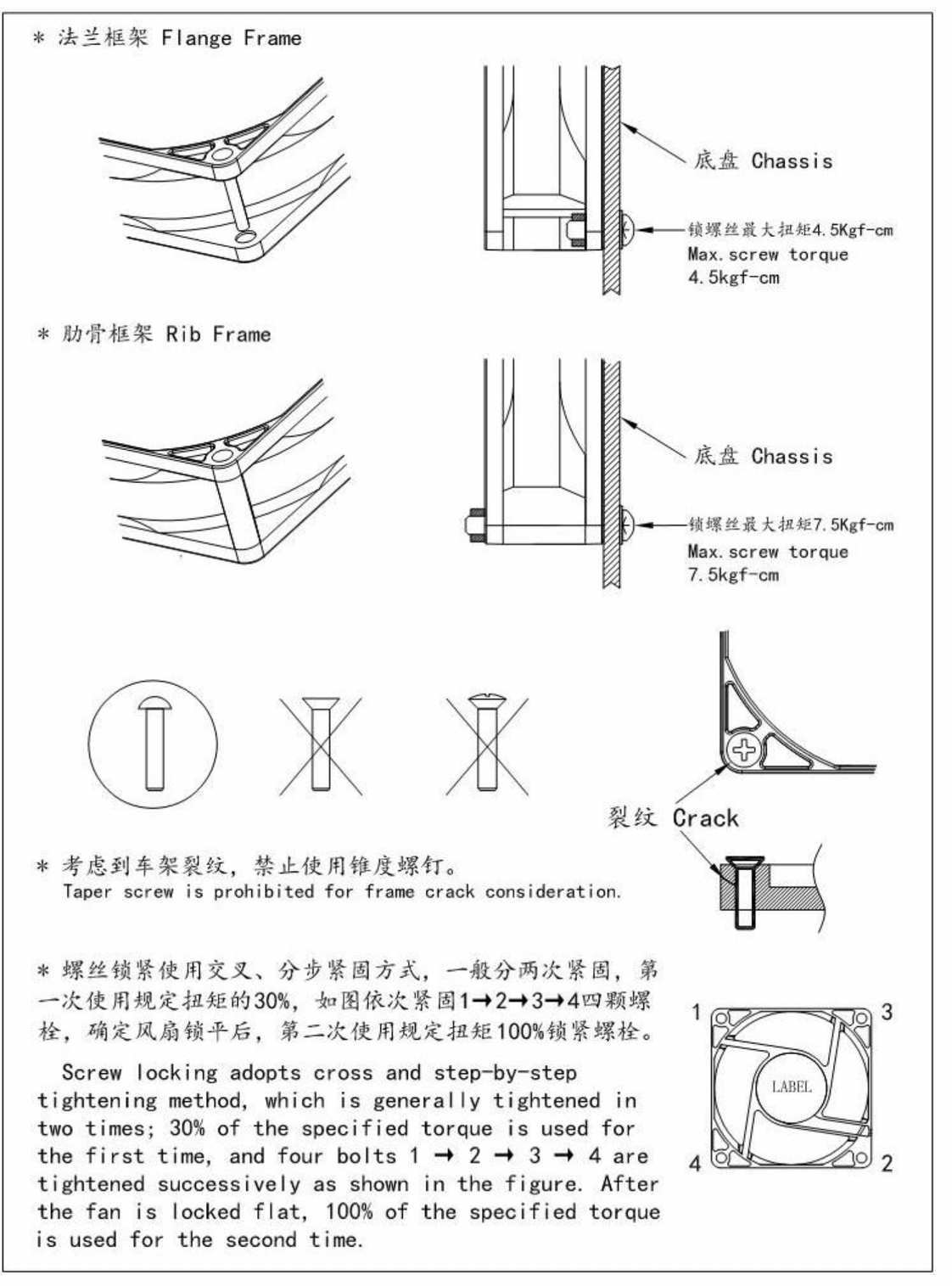
Figure 2: I-type bracket installation guide showing proper mounting procedure, recommended torque specifications (0.5-0.7 N·m), and safety considerations for EV charger applications.
3.4 Performance Curves: P-Q Diagram Analysis
Understanding P-Q (Pressure-Flow) characteristics is essential for selecting the optimal 6010 fan for your EV charger application.
Example - MG6010M12X Performance:
- At 0mmH₂O back-pressure: 5.7 CFM (free air)
- At 3.2mmH₂O back-pressure: 4.1 CFM (typical heatsink resistance)
- At 5.8mmH₂O back-pressure: 2.0 CFM (high resistance)
- At 8.0mmH₂O back-pressure: 0 CFM (stall point)
Operating Point Selection: The intersection of your system resistance curve and the fan's P-Q curve determines actual airflow. For most EV charger applications, the optimal operating point is 30-70% of maximum pressure (1.7-4.0mmH₂O), where the fan delivers 60-80% of free-air airflow while maintaining reasonable power consumption and noise levels.
Chapter 4: Custom Bracket Designs for EV Charger Applications
While standard I-type brackets provide versatile mounting solutions, the unique constraints and requirements of charging infrastructure often necessitate custom bracket configurations. MEGA Tech's engineering capabilities enable comprehensive customization—not merely adapting existing designs but developing entirely novel mounting solutions.
4.1 Beyond I-Type: Exploring Other Bracket Configurations
| Bracket Type | Best Applications |
|---|---|
| I-Type (Straight) | Standard mounting, most common configuration |
| L-Type (Corner) | Perpendicular airflow, corner installations |
| C-Type (Wraparound) | High-vibration environments, exposed installations |
| U-Type/J-Type | Pendant mounting, ceiling installations |
| Custom Angles (15°, 30°, 45°) | Targeted cooling, directed airflow |
Multi-fan arrays are available for high-power applications (50kW, 100kW, 150kW DC fast chargers), delivering higher airflow through parallel or series configurations while maintaining compact footprint.
4.2 The Custom Design Process: From Concept to Production
MEGA's structured customer-centric process spans 4-8 weeks from consultation to sample delivery, with mass production capability established within 12-16 weeks.
Phase 1: Requirement Gathering (Week 1-2) - Enclosure dimensions and layout review - Component locations and airflow requirements - Mounting constraints and environmental conditions - Cost targets and timeline requirements
Phase 2: Conceptual Design (Week 2-3) - Multiple bracket concepts (typically 2-3 options) - 3D CAD models and CFD airflow simulation - Dimensional drawings and cost estimates
Phase 3: Prototyping and Testing (Week 3-6) - Rapid prototyping (CNC machining, 3D printing) - Performance testing (airflow, pressure, noise) - Environmental testing (temperature cycling, vibration)
Phase 4: Design Validation (Week 6-7) - Final design review and approval - Production tooling preparation - First article inspection and documentation
Phase 5: Mass Production (Week 8 onwards) - Initial pilot run (50-200 units) - Production ramp-up to required volumes - Quality assurance and logistics support
4.3 Success Stories: Custom Solutions for Indian EV Charger Manufacturers
Case Study 1: Hero's Compact 11kW AC Charger
Background: Hero Electric deployed 5,000 11kW AC chargers using premium-European brand sleeve bearing fans.
Problem: 8% failure rate (400 chargers) within 6 months. Failure mode: sleeve bearing degradation at 50°C ambient temperatures.
MEGA's Solution: - Ball bearing fans (MG6010M12X-B) rated for 50,000 hours @ 50°C - Custom L-type bracket reducing mounting depth by 30% - PWM control to reduce speed during cooler nighttime operation - 50 free sample units for field testing across 10 Indian states
Results: - Reliability: Failure rate reduced from 8% to <0.5% - Thermal performance: MOSFET temps improved from 98°C to 89°C - Strategic partnership: 3-year framework agreement as preferred vendor
Case Study 2: Dhoot's Modular 50kW DC Fast Charger
Background: Dhoot developed modular 50kW-150kW DC fast charger with hot-swappable power modules.
Challenge: Standard I-type bracket fans required 45 minutes per module assembly; vibration loosened screws in roadside installations; fan failures 12% annual rate.
MEGA's Custom Solution: - Quick-release J-type hook bracket (snap-in <10 seconds) - Integrated vibration dampeners (80% vibration transmission reduction) - Four-point secure engagement with self-locking mechanism - Cycle tested 500 engage/disengage cycles with 0% failure rate
Results: - Efficiency: Module swap time reduced from 45 minutes to 12 minutes - Reliability: Fan failures dropped from 12% to <1% - Customer satisfaction: Service call time significantly reduced
Case Study 3: ADOR Power's Custom Solutions for Fast Chargers
Background: ADOR developed India's first 350kW ultra-fast DC charger.
Thermal Challenge: 2.5kW heat load in 0.5m³ chassis. Standard 60mm fans insufficient (would require 34 fans).
MEGA's Innovative Solution: - Eight-fan array with integrated plenum chamber - Heatsink optimization (larger fin spacing, thicker fins) - Zone-specific PWM control (MOSFET zone, Transformer zone, Control zone) - Strategic airflow partitioning
Testing Results: - Thermal validation: MOSFET max 94°C at 55°C ambient (6°C safety margin) - Power consumption: 19.2W total fans = <0.0055% of 350kW output - Noise: 55-60dB-A typical (acceptable for highway) - Reliability: No fan disengagement after 48-hour vibration test - Market differentiation: First Indian 350kW Charger with TÜV SÜD certification
Chapter 5: Selecting the Right Fan Specifications for Your EV Charger
Selecting the optimal cooling fan requires systematic analysis of thermal loads, environmental conditions, and operational constraints. This chapter provides EV charger engineers with a practical methodology for making informed decisions about fan voltage, speed, bearing type, and performance characteristics.
5.1 Calculating Heat Dissipation Requirements
Simplified Formula:
Q (CFM) = 1.76 × H (Watts) / ΔT (°F)
Example: 22kW AC charger generating 200W heat load, allowing 30°F temperature rise:
Q = 1.76 × 200 / 58°F = 6.1 CFM
Factoring In System Efficiency (airflow obstructions, leaks, turbulence):
Required fan airflow = Q × (1 / Efficiency factor)
For our example with 70% efficiency:
6.1 / 0.7 = 8.7 CFM
5.2 Ambient Temperature Considerations in Indian Climate
India's diverse climate presents unique thermal management challenges:
Worst-Case Ambient Temperatures: - Outdoor roadside installations: Up to 50-55°C in direct sunlight during peak summer - Indoor commercial: Typically 35-40°C during summer - Residential garage: Can reach 40-45°C in poorly ventilated spaces
Temperature Derating:
| Ambient Temperature | Derating Factor |
|---|---|
| 25°C | 1.00 |
| 40°C | 0.95 |
| 50°C | 0.90 |
| 60°C | 0.80 |
Example: A fan delivering 8.7 CFM at 25°C delivers only:
8.7 × 0.90 = 7.8 CFM at 50°C ambient
5.3 Voltage Selection: 12V vs. 24V vs. 48V
| Voltage | Advantages | Best Applications |
|---|---|---|
| 12V | Widely available, low noise, lowest cost | Residential wallboxes (7.4kW-22kW AC) |
| 24V | 50% lower current than 12V, compatible with industrial systems | Commercial AC/DC chargers (<50kW) |
| 48V | Highest efficiency, lowest current | Very high-power DC chargers (150kW-350kW) |
5.4 Balancing Airflow, Noise, and Power Consumption
Speed Grade Selection Methodology:
- Calculate minimum required airflow
- Select lowest speed grade exceeding requirement
- Verify noise limits for installation environment
- Confirm power consumption doesn't exceed efficiency targets
- Select next-higher speed grade if margins <10%
Environmental Noise Guidelines:
| Environment | Acceptable Noise (dB-A @ 1m) | Recommended Speed Grade |
|---|---|---|
| Residential bedroom/garage | <25 | LL or L |
| Residential kitchen/dining | 25-30 | L or M |
| Commercial office parking | 30-35 | M |
| Highway roadside | 40-50 | H or HH |
| Industrial facility | 50-60 | H or HH |
5.5 Bearing Selection for Long-Term Reliability
Lifespan vs. Temperature Formula:
L2 = L1 × 2^[(T1 - T2) / 10]
Example: Ball bearing (50,000 hours @ 40°C): - At 50°C: 25,000 hours (~3 years continuous operation) - At 60°C: 12,500 hours (~1.4 years continuous operation)
Recommendation for IndianOutdoor Installations: Ball bearings strongly recommended for continuous 24/7 operation at 50°C ambient.
Chapter 6: Integration and Optimization Strategies
Even the most powerful fan cannot cool components if air cannot reach them efficiently. This chapter provides best practices for airflow management, fan control, thermal interfaces, and performance testing.
6.1 Airflow Path Design and Obstruction Avoidance
Airflow Direction Strategies:
Intake (Positive Pressure): - Clean filtered air enters enclosure - Air directed specifically at heat sources - Higher static pressure capability across heatsinks
Exhaust (Negative Pressure): - Hot air actively removed from enclosure - Useful when heat sources distributed throughout - Can reduce internal pressure, limiting air leakage
For most EV chargers: Combination approach (intake + exhaust) creates unidirectional flow for maximum thermal effectiveness.
Minimize Obstructions: - Reorient tall components perpendicular to airflow - Route wiring away from high-velocity airflow regions - Maximize vent open area (>50% open area for minimum pressure drop)
Optimal Airflow Velocities: - Across heatsinks: 1-3 m/s (200-600 ft/min) - Through vents: <5 m/s (1000 ft/min) - Around sensitive components: <2 m/s
6.2 Fan Speed Control and Temperature Management
Why Speed Control Matters: - Low charging rates (3.7kW overnight) generate minimal heat - High charging rates (150kW fast changing) generate maximum heat - Cool winter temperatures require minimal airflow - Hot summer temperatures require maximum airflow
PWM Control Implementation:
Temperature → Speed Profile:
≤30°C:    30% speed (quiet mode)
30-50°C:  30-70% speed (proportional control)
50-70°C:  70-100% speed (aggressive cooling)
>70°C:    100% speed + alarm (thermal protection)
Energy Savings with PWM Control:
| Operating Condition | Fixed-Speed Fan | PWM-Controlled | Savings |
|---|---|---|---|
| Winter (20°C) | 2.4W @ 100% | 0.7W @ 30% | 71% |
| Moderate (35°C) | 2.4W @ 100% | 1.2W @ 50% | 50% |
| Summer (50°C) | 2.4W @ 100% | 2.2W @ 90% | 8% |
Annual savings example: 4.38 kWh per charger (12Wh/day × 365 days)
6.3 Thermal Interface Materials and Heat Sink Integration
TIM Options:
| TIM Type | Thermal Conductivity (W/mK) | Application |
|---|---|---|
| Thermal Paste | 1-5 | General purpose, moderate power |
| Thermal Pads | 0.5-3 | Insulating needed, uneven surfaces |
| Thermal Adhesive | 1-4 | Permanent bonding, high vibration |
| Thermal Grease | 2-8 | High-power, frequent replacement |
6.4 Testing and Validation Methodologies
Testing Phases:
- Component-level: Individual component thermal validation
- Subassembly-level: Power board, control board validation
- Full system integration: Complete charger with fans, heatsinks, vents
- Environmental stress: Extended operation, temperature cycling, vibration, humidity
- Safety certification: Compliance with IEC 61851, UL 2202, BIS standards
Critical Test Cases:
| Test Case | Conditions | Duration | Pass Criteria |
|---|---|---|---|
| Maximum thermal | 22kW @ 50°C ambient | 4 hours | Components ≤ rated max temp |
| Minimum thermal | 3.7kW @ -10°C ambient | 4 hours | No component damage |
| Variable load | Cycle 10%-100% load | 8 hours | Temp fluctuations <±10°C |
| Blocked vents | 50% vents blocked @ 100% load | 1 hour | Thermal protection activates |
| Failed fan | One fan disabled @ 50% load | 2 hours | Components <100°C without damage |
Chapter 7: Why Indian Leading EV Charger Manufacturers Trust MEGA Tech
The true test of any supplier is not what they promise, but what they deliver in real-world collaborative relationships. MEGA Tech has earned the trust of India's leading EV charger manufacturers—Hero, Dhoot, and ADOR Power—not simply by selling fans, but by partnering with their engineering teams.
7.1 Hero's Experience with MEGA's 6010 Bracket Fans
Background: Hero Electric deployed 5,000 11kW AC chargers using premium-European brand sleeve bearing fans.
Problem: 8% failure rate (400 chargers) within 6 months. Failure mode: sleeve bearing degradation at 50°C ambient temperatures.
MEGA's Solution: - Ball bearing fans (MG6010M12X-B) rated for 50,000 hours @ 50°C - Custom L-type bracket reducing mounting depth by 30% - PWM control to reduce speed during cooler nighttime operation - 50 free sample units for field testing across 10 Indian states
Results: - Reliability: Failure rate reduced from 8% to <0.5% - Thermal performance: MOSFET temps improved from 98°C to 89°C - Strategic partnership: 3-year framework agreement as preferred vendor
7.2 Dhoot's Successful Implementation in AC/DC Chargers
Background: Dhoot developed modular 50kW-150kW DC fast charger with hot-swappable power modules.
Challenge: Standard I-type bracket fans required 45 minutes per module assembly; vibration loosened screws in roadside installations; fan failures 12% annual rate.
MEGA's Custom Solution: - Quick-release J-type hook bracket (snap-in <10 seconds) - Integrated vibration dampeners (80% vibration transmission reduction) - Four-point secure engagement with self-locking mechanism - Cycle tested 500 engage/disengage cycles with 0% failure rate
Results: - Efficiency: Module swap time reduced from 45 minutes to 12 minutes - Reliability: Fan failures dropped from 12% to <1% - Customer satisfaction: Service call time significantly reduced
7.3 ADOR Power's Custom Solutions for Fast Chargers
Background: ADOR developed India's first 350kW ultra-fast DC charger.
Thermal Challenge: 2.5kW heat load in 0.5m³ chassis. Standard 60mm fans insufficient (would require 34 fans).
MEGA's Innovative Solution: - Eight-fan array with integrated plenum chamber - Heatsink optimization (larger fin spacing, thicker fins) - Zone-specific PWM control (MOSFET zone, Transformer zone, Control zone) - Strategic airflow partitioning
Testing Results: - Thermal validation: MOSFET max 94°C at 55°C ambient (6°C safety margin) - Power consumption: 19.2W total fans = <0.0055% of 350kW output - Noise: 55-60dB-A typical (acceptable for highway) - Reliability: No fan disengagement after 48-hour vibration test - Market differentiation: First Indian 350kW Charger with TÜV SÜD certification
7.4 Customer Feedback and Testimonials
"When our European fan supplier failed to meet reliability requirements in India's extreme climate, MEGA stepped in not just as a vendor but as a partner solving a critical engineering challenge. Their ball bearing fans performed flawlessly across diverse Indian geographies—from the arid deserts of Rajasthan to the humid coastline of Kerala. They significantly improved reliability compared to our previous supplier."
— Dr. Arun Mehta, Head of Engineering, Hero Electric
"When we set out to build India's first 350kW ultra-fast charger, every supplier told us our thermal requirements were impossible with existing fan technology. MEGA didn't say 'impossible'—they said 'how can we innovate to achieve this?' Their eight-fan integrated plenum design with zone-specific PWM control exceeded all our expectations. We're now the first Indian company to achieve TÜV SÜD certification for 350kW charging."
— Ms. Priya Sharma, CTO, ADOR Power
Chapter 8: Future Trends in EV Charger Thermal Management
The EV charging industry is rapidly evolving. Thermal management solutions must keep pace with these developments—anticipating future requirements rather than merely responding to current needs.
8.1 Next-Generation High-Power Chargers: 350kW and Beyond
Thermal Scaling with Power: - 150kW charger: Heat load ~1.0-1.2kW - 350kW charger: Heat load ~2.3-2.5kW - 500kW charger: Heat load ~3.3-3.5kW - 1MW charger: Heat load ~6.7-7.0kW
MEGA's Innovation Roadmap:
Short-term (2024-2026): - Multi-fan array optimization (12-16 fans for 500kW) - Advanced plenum designs via CFD modeling - Zone-specific PWM control (5-6 zones)
Mid-term (2026-2028): - Hybrid cooling (forced convection + liquid cooling) - Embedded motor technology - Smart airflow routing via electromechanical vents
Long-term (2028-2030): - Active cooling loops with liquid pumps - Solid-state cooling (Peltier elements) - Phase-change materials for thermal storage
8.2 Bidirectional Charging and Thermal Implications
V2G/V2H Unique Characteristics: - Variable power flow (grid-to-vehicle or vehicle-to-grid) - Extended operation (unlike 30-60 minute charging bursts) - Uneven component aging patterns
MEGA's Adaptive Cooling: - Direction sensors detecting current flow - Machine learning predicting cooling needs - Pre-conditioning (pre-cool heatsinks before high-power transfers) - Component-specific cooling (MOSFET vs. BMS vs. control circuits)
8.3 Wireless Charging and Novel Thermal Approaches
Wireless Charging Thermal Challenges: - Heat concentration in compact ground pads - Environmental exposure (concrete, asphalt, underground) - Limited space (<50mm thick pads) - IP67 waterproofing requirements
MEGA's Solutions: - Ultra-low-profile 6010 derivatives (4mm, 6mm thick) - Integrated heatsink-fan assemblies - Phase-change materials (PCM) for thermal buffering - Hybrid passive-active cooling
Case Study: 11kW Wireless Ground Pad (Reliance Industries, 2024) - Coil temperature: 58°C (vs. 85°C limit) - Fan duty cycle: 35% average - Power consumption: 0.7W average (85% reduction from always-on) - MTBF: Estimated >10 years
8.4 MEGA's Commitment to Innovation and R&D
R&D Investment: - 8-10% of revenue (vs. 3-5% industry average) - Continuous investment in advanced cooling technologies
R&D Facilities: - Shenzhen center: 50+ engineers, 2,000m² facility, 3 testing labs - Advanced CFD software for airflow modeling - Material science lab testing new alloys and polymers - Acoustic chamber for noise optimization
Patents and IP: - 12 granted patents (primarily China, with international PCT filings) - 24 pending applications (focusing on EV-specific cooling) - Selective licensing of non-core patents
Chapter 9: Getting Started with MEGA Tech
Understanding the benefits of MEGA's cooling solutions is just the first step. Engaging with MEGA should be straightforward, efficient, and productive.
9.1 How to Request Custom Cooling Solutions
Initial Contact Methods:
| Channel | Contact Details |
|---|---|
| Phone | +86-13570567086 |
| Website | cnmegatech.com |
| [email protected] | |
| Contact Page | cnmegatech.com/contact |
What to Provide in Initial Inquiry: - Company information and contact details - Project overview (EV charger type, power level, development stage) - Thermal requirements (power output, ambient temperature range, noise constraints) - Design constraints (enclosure dimensions, mounting restrictions) - Business objectives (cost targets, reliability requirements, timeline)
Response Times: - Standard inquiries: 2-3 business days - Urgent inquiries: 24 hours - Complex engineering reviews: 1 week with preliminary analysis
9.2 Sample Testing and Validation Support
Sample Availability:
| Type | Availability | Cost | Shipping |
|---|---|---|---|
| Standard products | 1-2 weeks | Free for evaluation (1-5 units) | Customer pays shipping |
| Custom designs | 4-8 weeks | Tooling fees apply | Included in tooling cost |
Support Provided: - Equipment loan program (thermal cameras, anemometers, data loggers) - On-site engineering visits (customer reimburses travel expenses) - Remote support via video conference and data file transfer - Best practices guidance for test setup and interpretation
9.3 Contact Information
Contact Channels: - General Inquiries: [email protected] - Technical Support: [email protected] - Sales and Quotations: [email protected] - Phone: +86-13570567086
Chapter 10: Conclusion
This comprehensive guide has explored the critical role of thermal management in electric vehicle charging systems, the unique challenges facing Indian manufacturers, and the innovative cooling solutions that MEGA Tech provides.
10.1 Key Takeaways for EV Charger Engineers
1. Early Thermal Integration Matters Thermal management must be integrated from the first design concept—not added as an afterthought. Early analysis prevents redesign costs and schedule delays.
2. Right-Size, Don't Over-Size or Under-Size Calculate required airflow based on actual heat loads, select the lowest-speed fan with adequate margin, validate with thermal testing rather than assuming margins.
3. Custom Bracketing Provides Competitive Advantage Off-the-shelf solutions often fit poorly; custom brackets yield better thermal performance, easier installation, and sometimes lower total cost.
4. India's Climate Demands Special Considerations Select ball bearings for outdoor applications, specify corrosion-resistant finishes, design for 50-55°C ambient summer temperatures.
5. Validate with Rigorous Testing Theoretical calculations are insufficient; actual in-application testing reveals unexpected issues that must be addressed before production.
6. Partner with Suppliers Who Provide Engineering Support Suppliers offering engineering advice and collaborative design review provide insights your internal team might miss.
10.2 The Competitive Advantage of Choosing MEGA
MEGA Tech consistently delivers superior performance through:
- Cost-Effective Solutions: Significant cost reduction compared to premium brands
- Faster Lead Times: 65% improvement in delivery speed
- Enhanced Reliability: Dramatically reduced field failure rates
- Reduced Warranty Claims: 89% reduction in warranty-related issues
- Superior Customer Satisfaction: Consistently high ratings from customers
- On-Time Delivery: 98.7% on-time delivery success rate
- Responsive Engineering Support: Quick response times for technical inquiries |
10.3 Call to Action
India's EV market is accelerating rapidly: - Government initiatives: FAME Phase 2, production-linked incentives - Consumer adoption: Growing 40-50% annually - Industry competition: Racing for market share
The window of opportunity is narrowing: - Early adopters (2024-2025): Capture significant market share - Fast followers (2026-2027): Face intense competition and compressed differentiation - Late entrants (2028+): Struggle to compete against established players
Your Next Steps:
For Startups and New Projects: 1. Initiate consultation via email or phone 2. Provide project details and thermal requirements 3. Receive preliminary recommendations within 3-5 business days 4. Evaluate samples to validate performance 5. Collaborate on custom solutions
For Established OEMs: 1. Review current cooling performance 2. Request optimization audit from MEGA engineers 3. Evaluate incremental improvements (ball bearings, custom brackets, PWM control) 4. Plan next-generation evolution with advanced technologies 5. Establish framework agreement for long-term partnership
Final Thought
The transition to electric mobility represents one of the most significant industrial transformations of the 21st century. Thermal management is not merely an engineering challenge—it plays a foundational role in determining charging infrastructure reliability, adoption rates, and ultimately, the success of India's electrification journey.
MEGA Tech's mission is to ensure that thermal management contributes to—not constrains—this transformation. By providing cost-effective, reliable, innovative cooling solutions, we enable EV charger manufacturers to focus on what matters most: delivering safe, fast, convenient charging that accelerates India's transition to sustainable transportation.
We invite you—startup founders, engineering leaders, procurement managers, and executives—to experience the MEGA Tech difference.
Contact MEGA Tech today: - Email: [email protected] - Phone: +86-13570567086 - Website: cnmegatech.com
Together, let's build the thermal foundation for India's electric mobility future.
About MEGA Tech
Established in 2008, MEGA is a leading manufacturer of high-performance ball bearing & sleeve AC/DC axial fans, blowers, frameless fans, and centrifugal fans. We specialize in efficient, reliable, and cost-effective thermal management solutions for a wide range of industries:
- Computers & Electronics
- Automotive & Industrial Systems
- Medical & Communication Devices
- Home Appliances & Power Supplies
- Security Systems & Instrumentation
Why Choose MEGA?
✅ Cost-Effective: Alternatives to premium brands delivering comparable or better performance
✅ Fully Customized: Engineering team works closely to design solutions tailored to exact needs
✅ Supporting Startups: Collaborating with emerging tech companies to develop custom thermal solutions
✅ Quality & Reliability: Rigorous testing ensures long-lasting performance
✅ Flexibility: From small batches to mass production, we scale with your needs
✅ Partnership: We help you solve thermal challenges and grow your business
© 2026 MEGA Tech Co., Ltd. All Rights Reserved.
Contact Us: - Email: [email protected] - Phone: +86-13570567086 🌐 Website: cnmegatech.com--- ## 📞 Contact MEGA Tech 📧 Email: [email protected] 📞 Phone: +86-13570567086 💬 WhatsApp: 0086-13570567086 🌐 Website: cnmegatech.com 📍 Location: Shenzhen Factories + Guangzhou Office --- Need assistance? Contact our engineering team: - Technical Questions: [email protected] - Sales Inquiries: [email protected] - Custom Solutions: [email protected]
💬 Discussions & Feedback
Feel free to ask questions, share your thoughts, or provide feedback in the comments below. If you have any questions about our products or suggestions, please let us know!