
AI Server Cooling Fan Guide: Complete Thermal Management for High-Density Computing Infrastructure
AI Server Cooling Fan Guide: Complete Thermal Management for High-Density Computing Infrastructure
As AI workloads push server power densities to unprecedented levels—with single GPU cards now consuming 700W and beyond—traditional cooling approaches are failing across the data center industry. This comprehensive guide examines the thermal challenges facing modern AI infrastructure and provides proven solutions using industrial-grade DC cooling fans optimized for each form factor.
The AI Cooling Crisis: Why Traditional Fans Are Failing
The rapid evolution of AI computing has created a "thermal crisis" across data centers worldwide. In 2025, as organizations deployed next-generation high-power GPUs, many discovered their existing cooling infrastructure couldn't handle the extreme heat loads.
The Core Problem:
Modern AI servers generate heat comparable to industrial furnaces. A 4U GPU training cluster with 8 high-performance GPUs can produce over 5,600W of thermal energy. Standard consumer-grade or legacy industrial fans simply cannot:
- Sustain airflow against high static pressure from dense heatsink arrays
- Operate reliably 24/7 at high temperatures without bearing failure
- Maintain performance consistency across varied form factors (1U to 4U)
Consequences of Inadequate Cooling:
- GPU thermal throttling reducing compute performance by 30-50%
- Frequent system reboots from motherboard overheating
- Fan bearing failures after 2-3 months of continuous operation
- Hard drive degradation from excessive fan vibration
- Elevated PUE (Power Usage Effectiveness) across the data center
Understanding Server Form Factor Cooling Requirements
Different server form factors present unique thermal management challenges. A one-size-fits-all approach leads to the exact failures described above.
1U Edge Inference Nodes: The Space Constraint Challenge
Physical Constraints: - Maximum height: 44.45mm (1.75 inches) - Extremely limited internal volume - Dense heatsink arrays blocking airflow paths
Cooling Requirements: - Ultra-high static pressure to force air through restricted passages - High RPM capability (8,000-12,000+ RPM) - Compact form factor (40mm or smaller fans)
Typical Failure Mode: Low-spec fans cannot push air through dense heatsinks, causing motherboards to overheat and reboot during inference workloads.
2U Compute & Storage Nodes: The Vibration Challenge
Physical Constraints: - Height: 88.9mm (3.5 inches) - Often contains mixed compute and storage components - NVMe SSDs and mechanical HDDs in close proximity
Cooling Requirements: - Balanced airflow and static pressure - Minimal vibration to protect sensitive storage devices - Moderate RPM (4,000-8,000 RPM)
Typical Failure Mode: Excessive fan vibration degrades adjacent enterprise hard drive lifespan, while insufficient airflow causes thermal spikes during multi-GPU parallel processing.
3U Expansion Nodes: The Efficiency Challenge
Physical Constraints: - Height: 133.35mm (5.25 inches) - Used for mid-chassis relay cooling and rack-level exhaust - Noise-sensitive environments
Cooling Requirements: - Excellent airflow-to-noise ratio - High CFM for heat extraction - Rack-level thermal management integration
Typical Failure Mode: Inadequate rear exhaust causes heat recirculation within the rack, raising inlet temperatures for all servers.
4U GPU Training Clusters: The Extreme Heat Challenge
Physical Constraints: - Height: 177.8mm (7 inches) - Multiple high-power GPUs (4-8 cards) - Extreme heat density (3,000-6,000W+ thermal load)
Cooling Requirements: - Maximum airflow capacity - Ultra-high static pressure to penetrate GPU array resistance - Industrial-grade bearings for 24/7 operation - High-temperature tolerance (40-60°C ambient)
Typical Failure Mode: Standard fans experience bearing lubricant dry-out after 2-3 months of continuous full-load operation, leading to widespread stalling and severe GPU thermal throttling.
MEGA Tech Full-Stack Cooling Matrix: Proven Solutions for AI Infrastructure
After analyzing hundreds of AI server deployments, MEGA Technology has developed a precisely matched "Full-Stack Cooling Matrix" that addresses the unique requirements of each form factor.
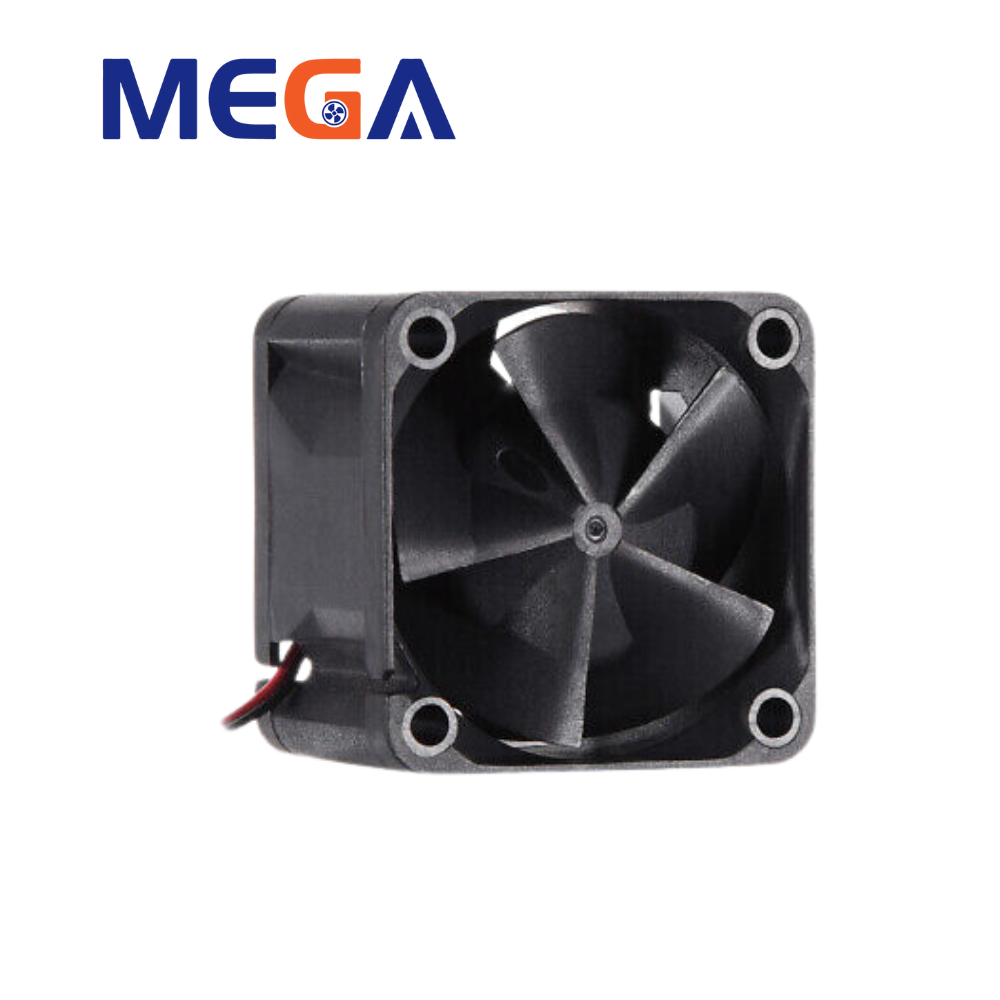
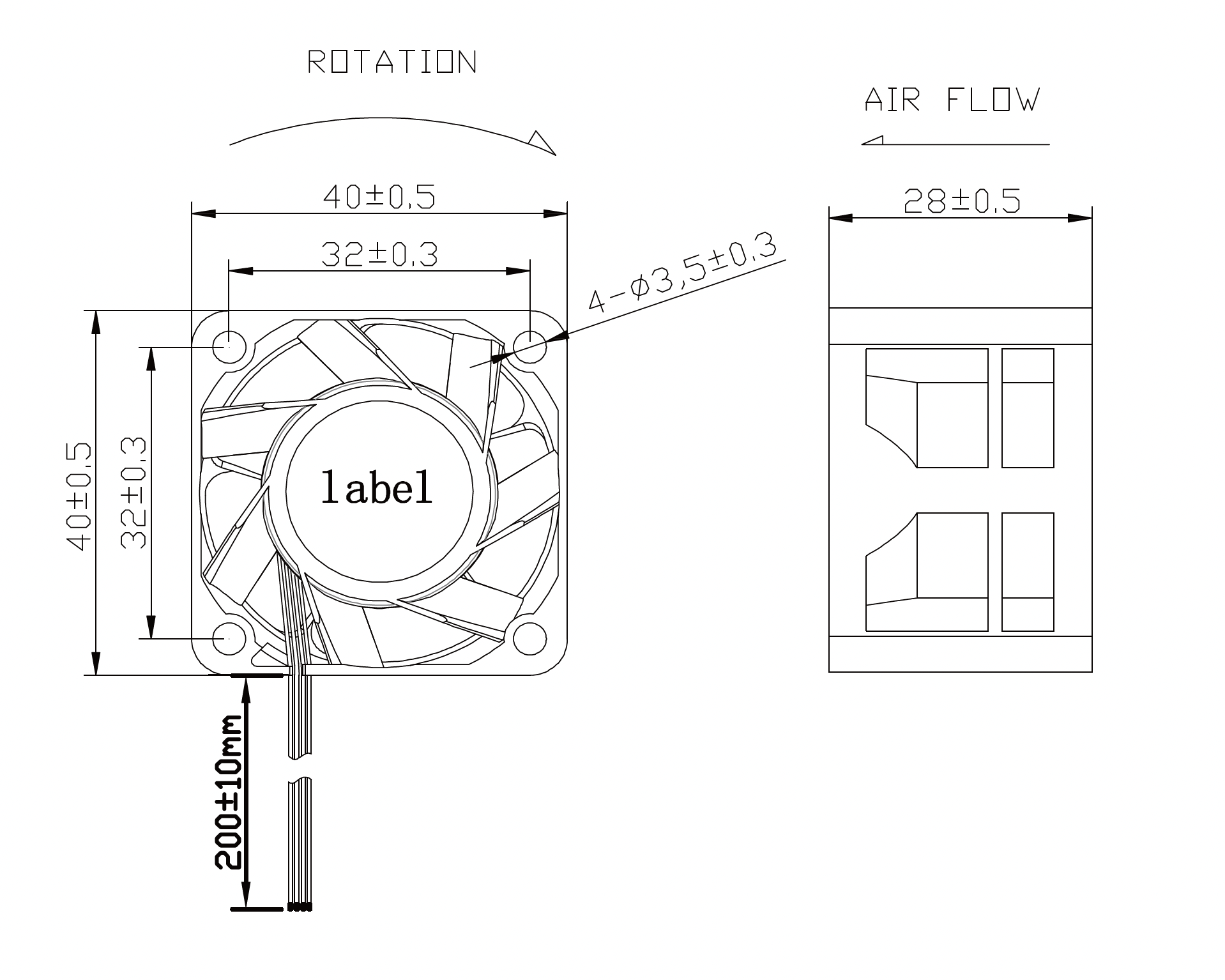
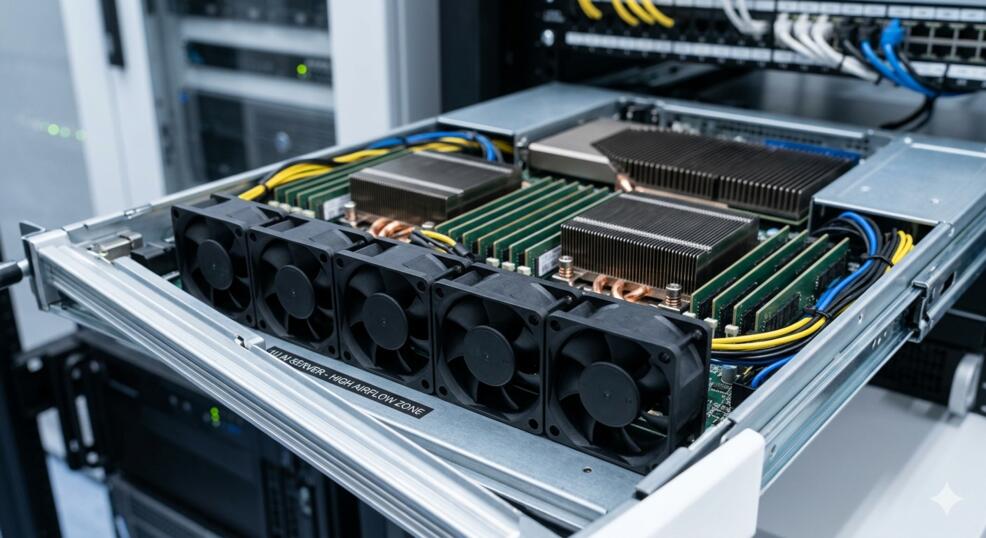
The 1U "Micro-Storm": MG4028 Series (40×40×28mm)
Designed for: 1U edge inference nodes, network equipment, embedded systems
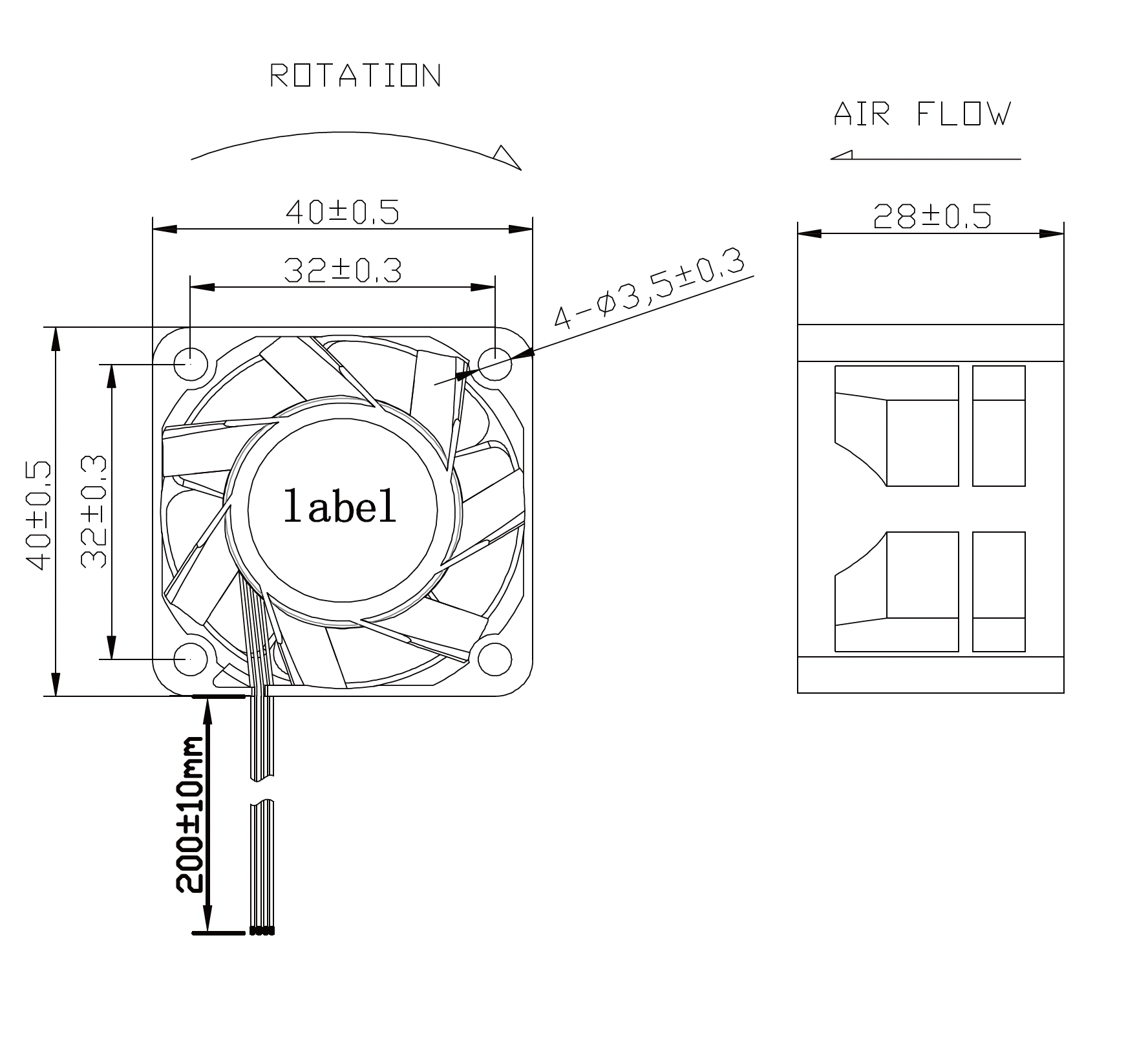
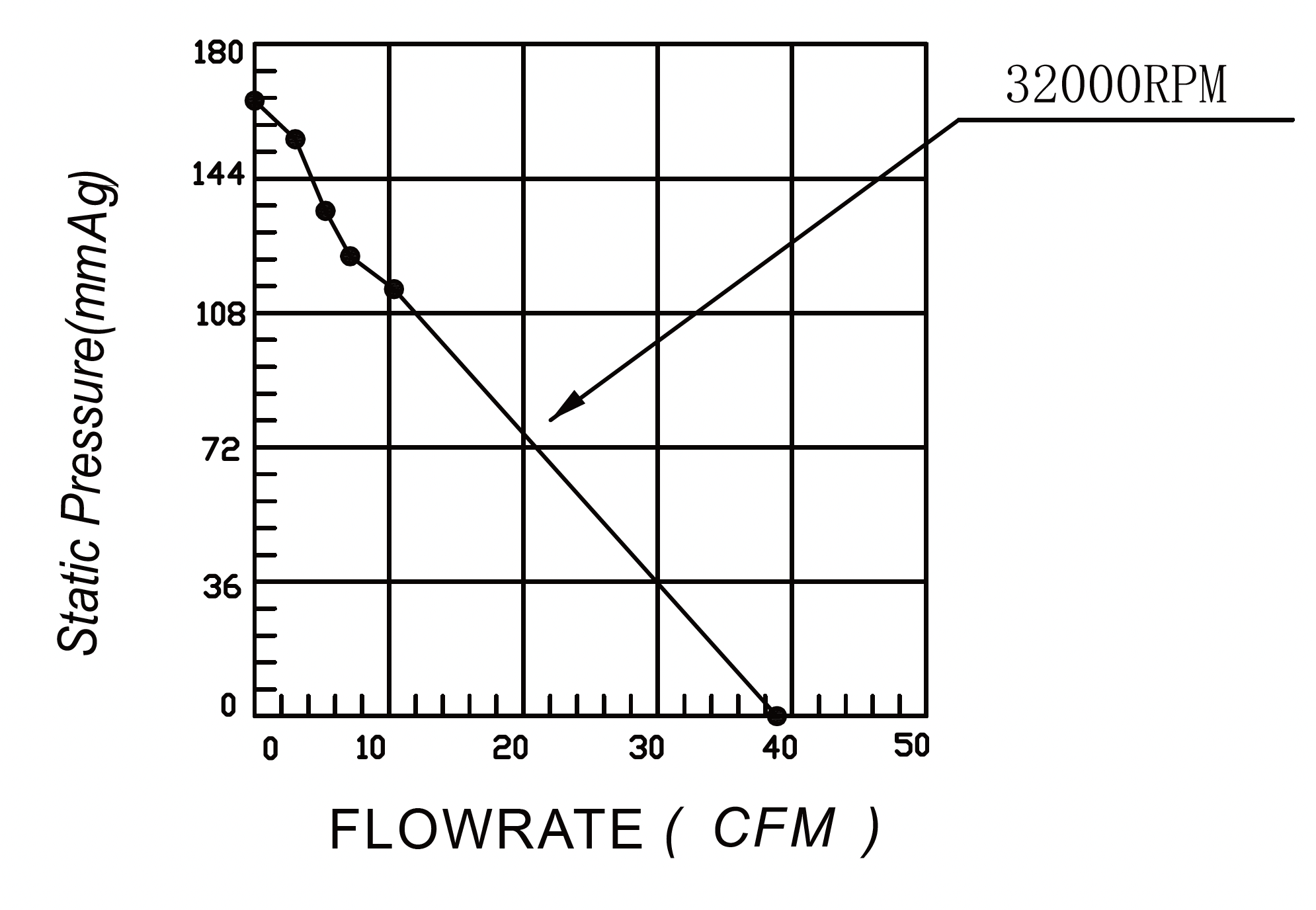
Key Specifications: - Dimensions: 40×40×28mm - Speed Range: 7,000-32,000 RPM (highest RPM in class) - Airflow: 8.73-38.5 CFM - Static Pressure: Up to 6.44 mmH₂O - Bearing Options: Sleeve, Ball, HY (Hydraulic) - Voltage: 12V, 24V
Why MG4028 for 1U Servers:
The 28mm thickness is the critical advantage. Unlike standard 20mm or 25mm fans, the MG4028's thickened design combined with specially tuned ducted blades generates terrifying static pressure within a tiny footprint. This forces cold air straight through the dense CPU heatsink arrays inside 1U chassis.
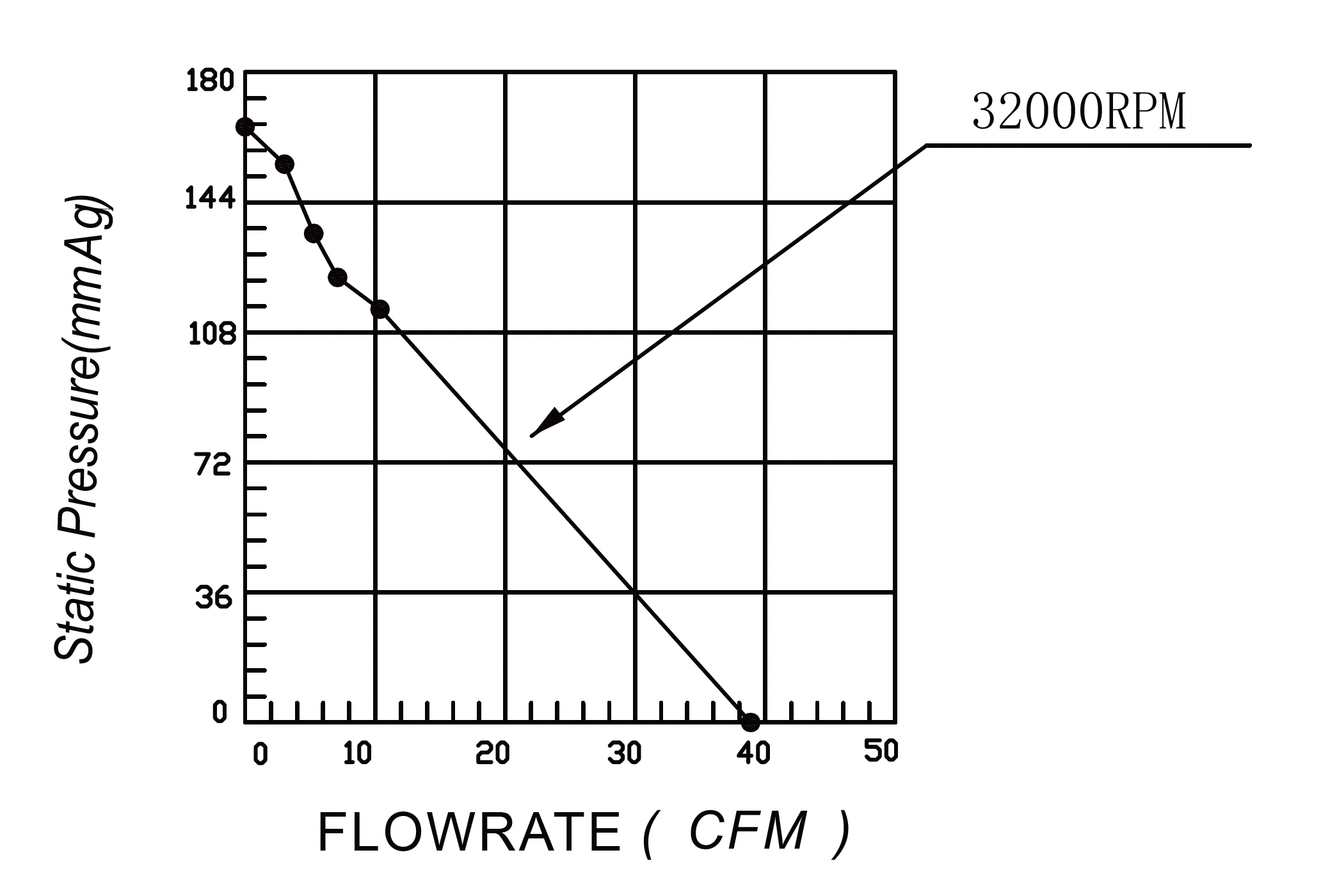
Performance Characteristics: - At 10,000+ RPM, creates focused airflow column that penetrates restricted heatsink passages - Designed for maximum static pressure in minimal vertical clearance - Ideal for point-source cooling of hotspots in dense 1U layouts
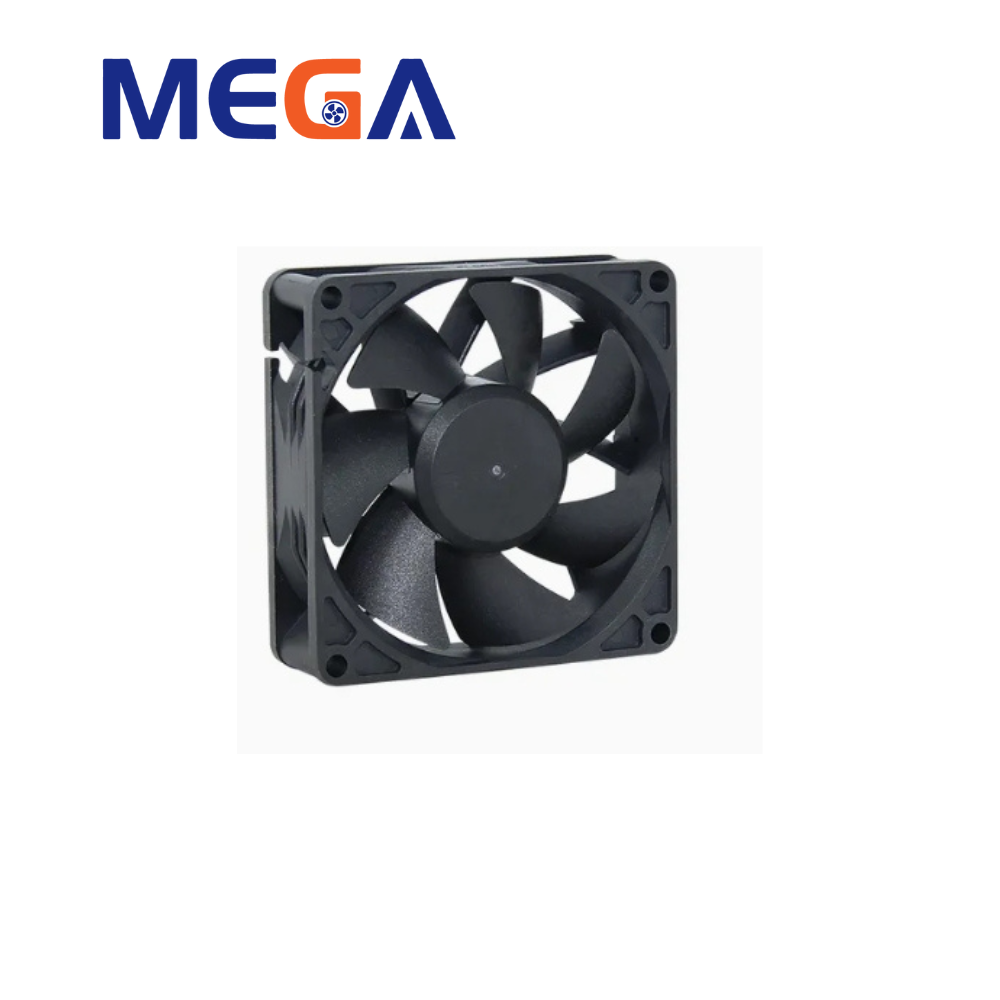
The 2U "Steady Guardian": MG8025 Series (80×80×25mm)
Designed for: 2U AI inference nodes, storage servers, network switches, UPS systems
Key Specifications: - Dimensions: 80×80×25mm - Model Variants: 89 models (most versatile series) - Speed Range: 2,500-6,500 RPM - Airflow: 24.4-126.5 CFM - Static Pressure: Up to 6.44 mmH₂O - Bearing Options: Sleeve, Ball, HY - Voltage: 12V, 24V
Why MG8025 for 2U Servers:
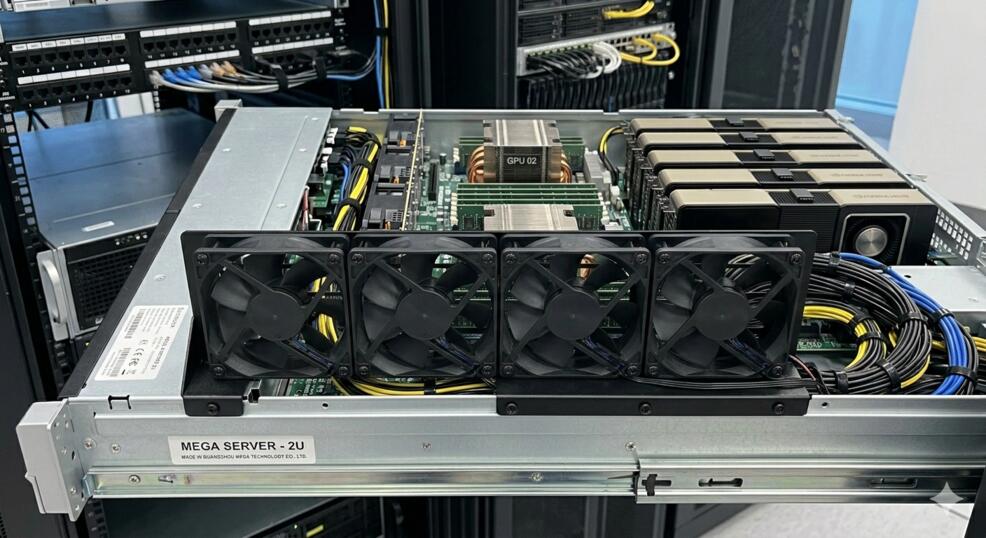
While providing ample airflow (CFM), the MG8025 matrix employs MEGA Tech's exclusive dynamic balance calibration technology to minimize physical resonance. This is critical for 2U servers that often contain sensitive NVMe SSDs and mechanical HDDs in the same chassis.
Performance Characteristics: - Balanced airflow and static pressure profile - Low-vibration operation protects storage device integrity - Wide RPM range allows precise thermal control via PWM - Suitable for mixed compute-storage configurations
The 3U "Efficiency Pioneer": MG12025 Series (120×120×25mm)
Designed for: 3U expansion nodes, rack-level exhaust systems, edge computing platforms
Key Specifications: - Dimensions: 120×120×25mm - Model Variants: 47 models - Speed Range: 1,820-3,600 RPM - Airflow: 64.2-151.7 CFM - Static Pressure: Up to 6.44 mmH₂O - Bearing Options: Sleeve, Ball, HY - Voltage: 12V, 24V
Why MG12025 for 3U Servers:
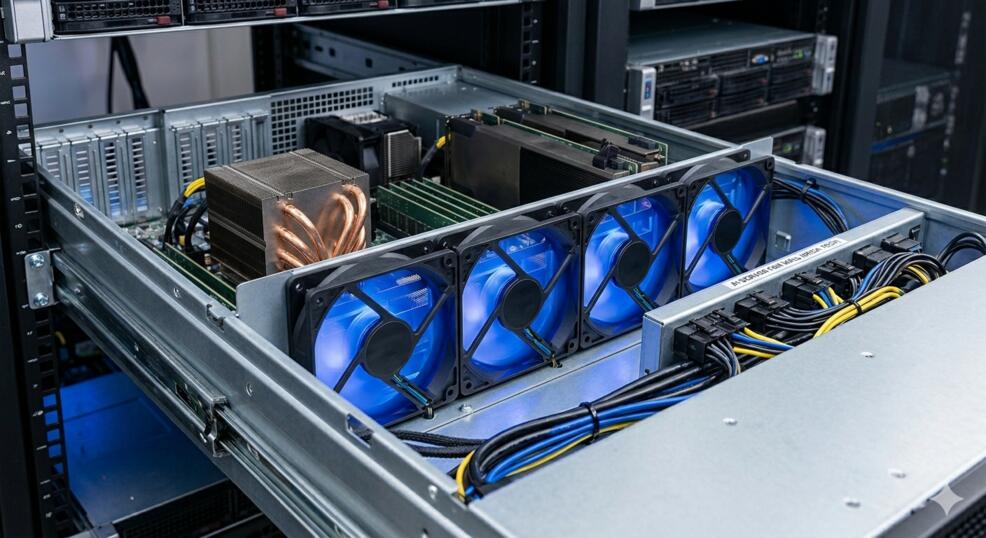
The MG12025 excels in airflow-to-noise ratio, making it ideal for environments where acoustic performance matters. It serves dual roles: mid-chassis relay cooling and rear rack-door exhaust deployment.
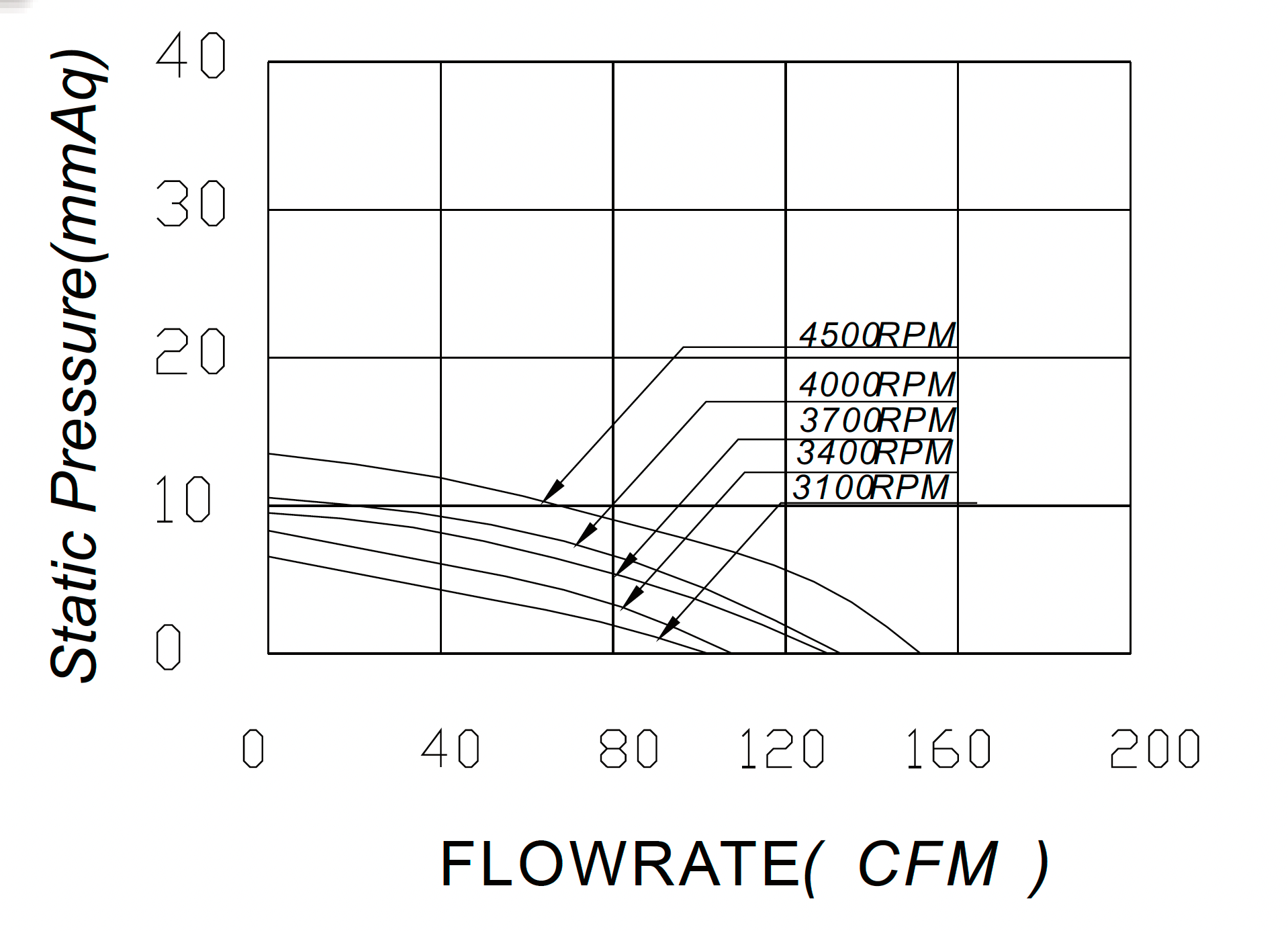
Performance Characteristics: - Superior CFM per watt of power consumed - Optimized blade geometry for low-turbulence airflow - Ideal for rack-level thermal management - Prevents heat recirculation within server cabinets
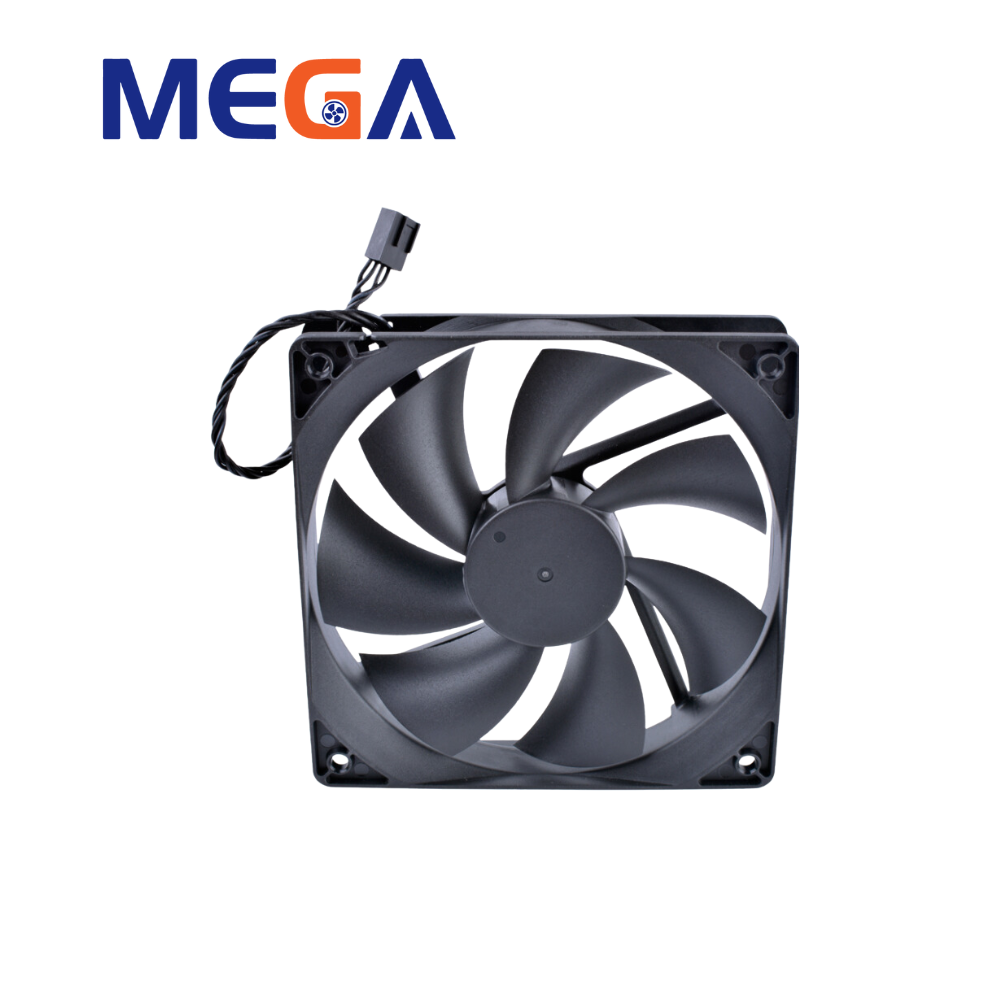
The 4U "Heavyweight Anchor": MG12038 Series (120×120×38mm)
Designed for: 4U GPU training clusters, high-density compute nodes, AI inference servers
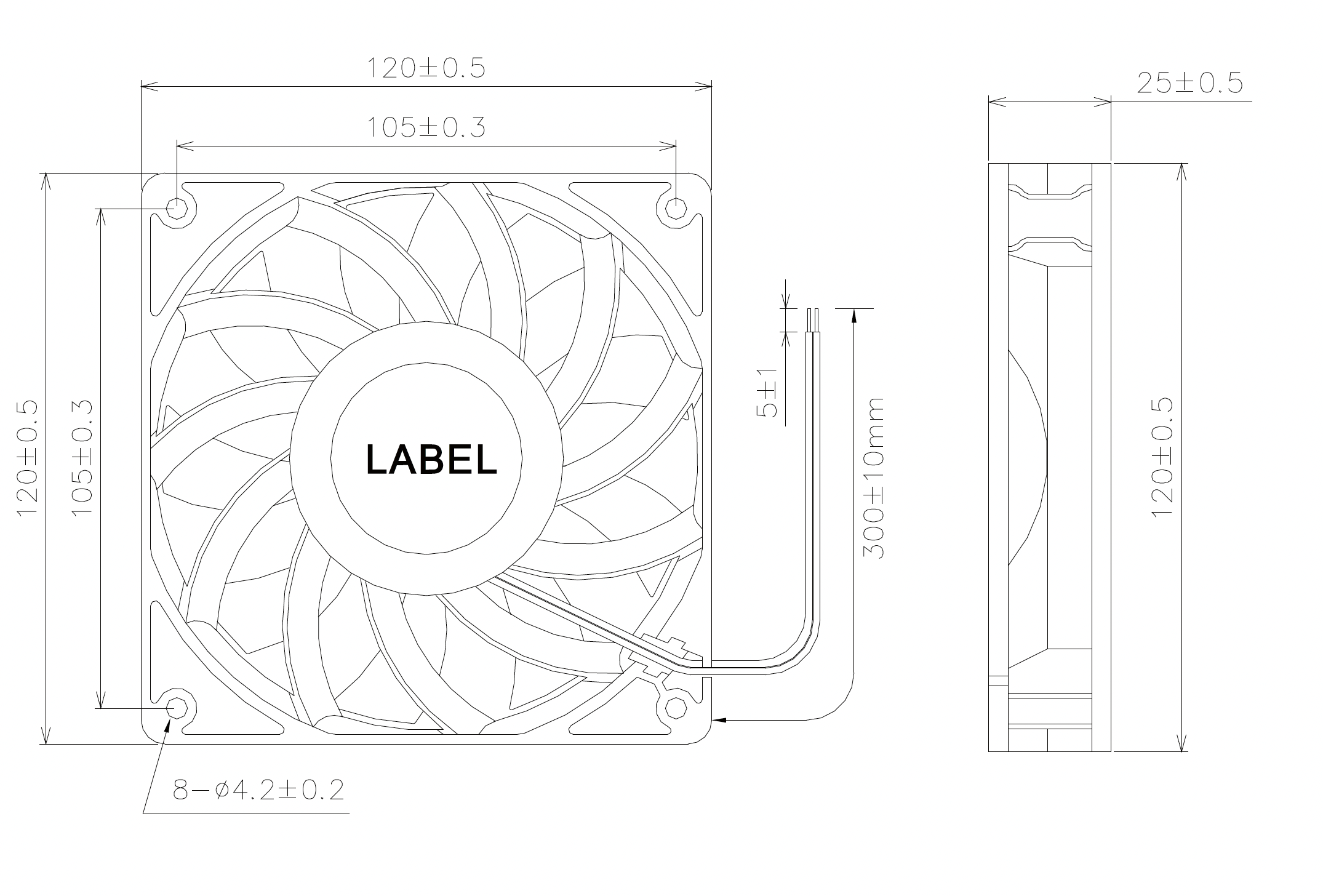
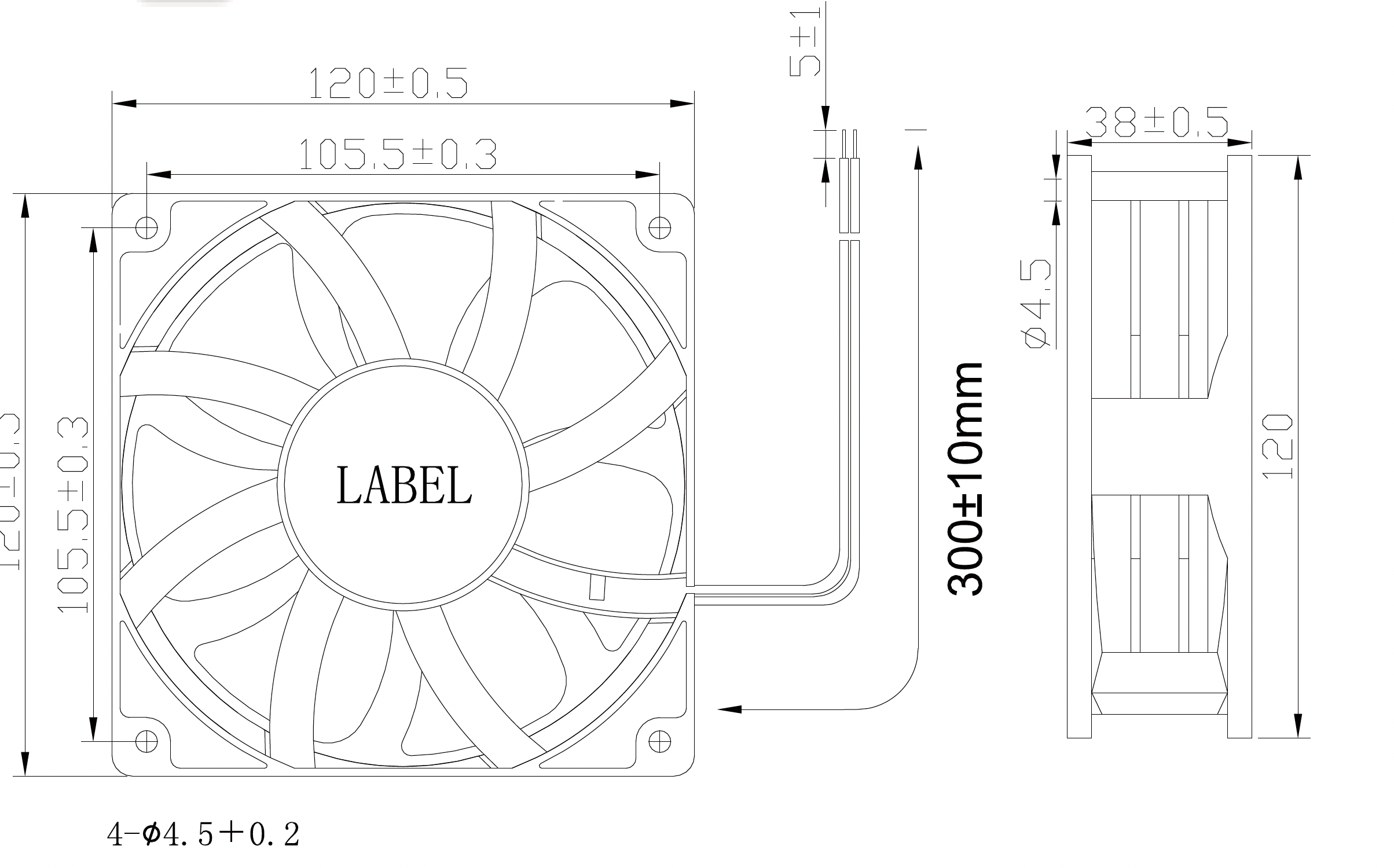
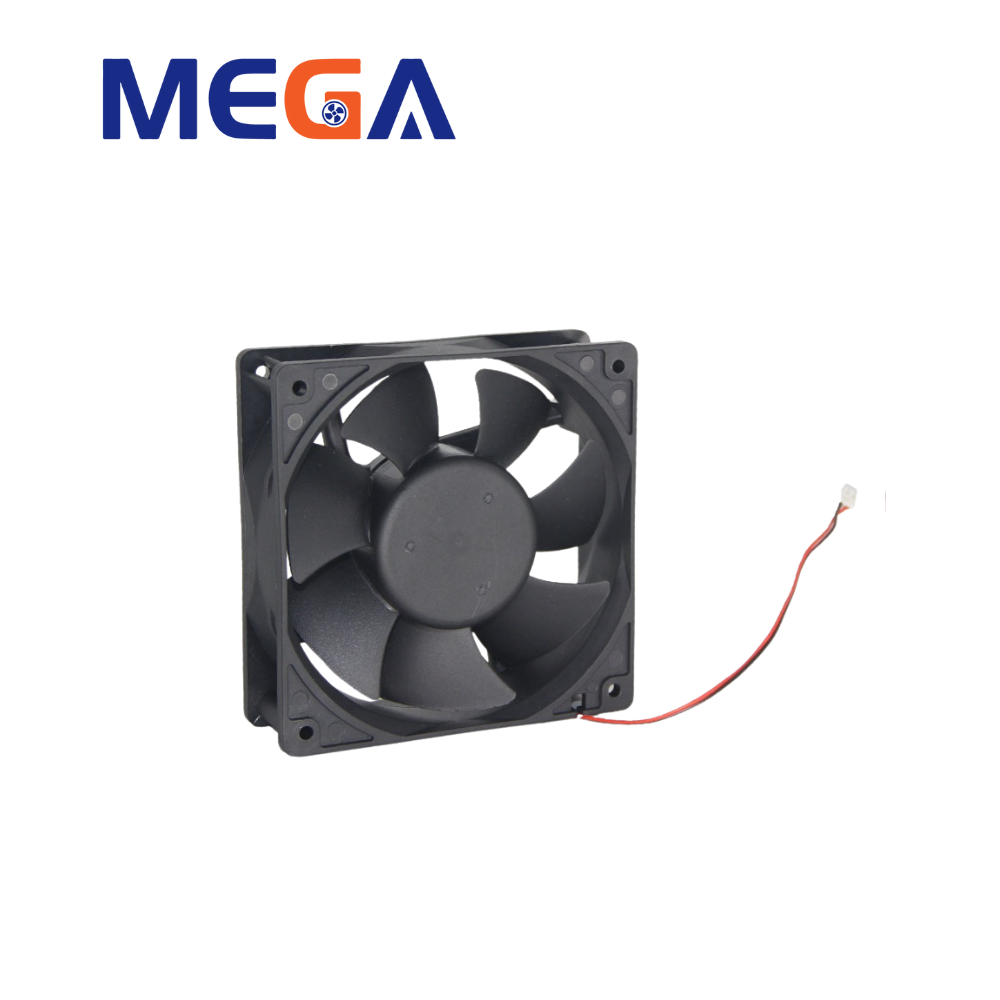
Key Specifications: - Dimensions: 120×120×38mm - Model Variants: 130 models (second largest series) - Speed Range: 1,800-5,800 RPM - Airflow: 63.9-246.6 CFM - Static Pressure: Exceptional (thickest profile in 120mm class) - Bearing Options: Sleeve, Ball, HY - Voltage: 12V, 24V
Why MG12038 for 4U GPU Servers:
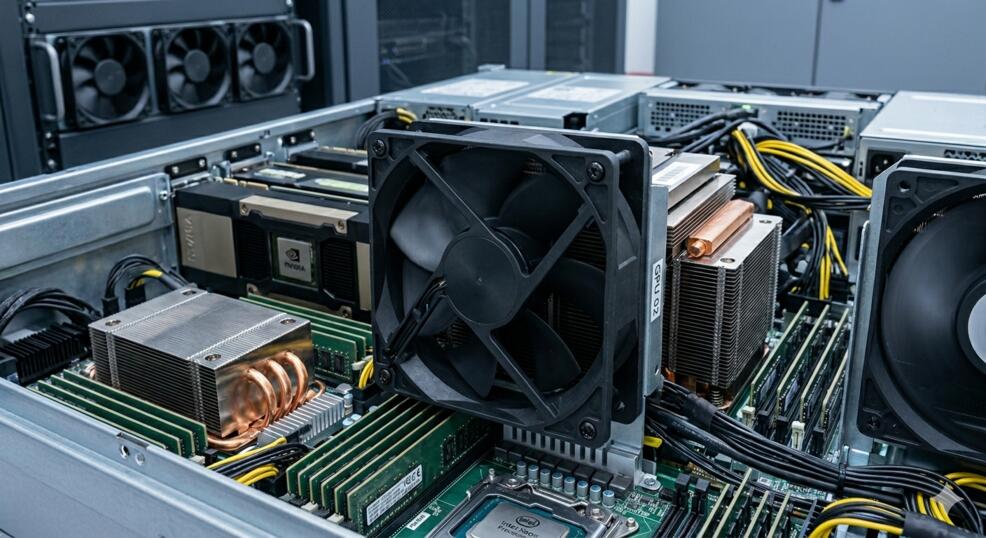
This is the heavy-duty solution for the most extreme thermal environments. The 38mm thickness provides unparalleled penetrating power, effortlessly breaking through the extreme air resistance caused by 8-card GPU arrays and dense power supply assemblies.
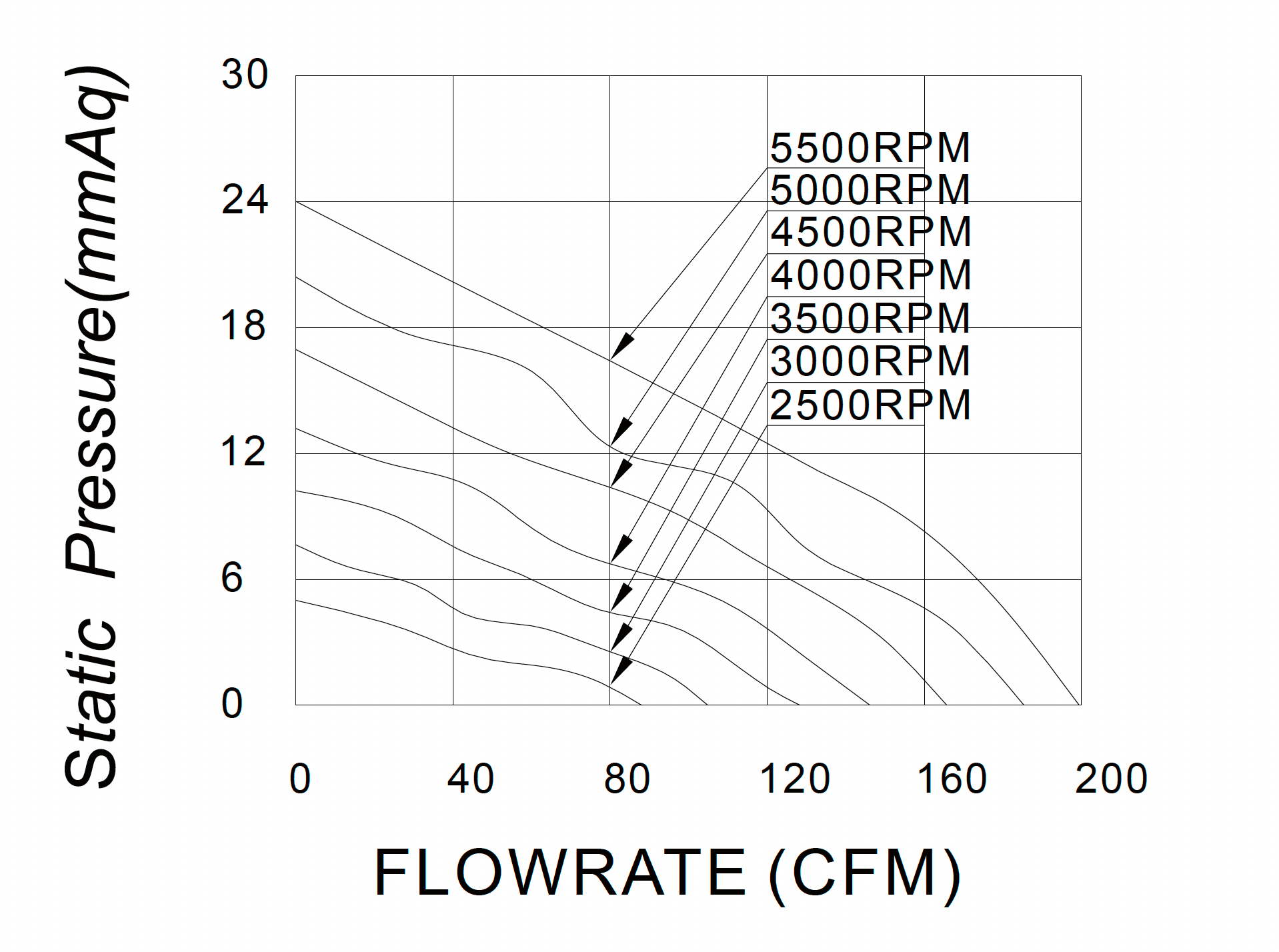
Performance Characteristics: - Industrial-grade dual ball bearings eliminate the fatal pain point of bearing dry-out under high temperatures - Designed for 24/7 continuous operation at 40-60°C ambient temperatures - Capable of maintaining airflow through severely restricted pathways - MTBF exceeds 70,000 hours at 25°C, 50,000+ hours at elevated temperatures
Product Comparison Matrix
| Specification | MG4028 | MG8025 | MG12025 | MG12038 |
|---|---|---|---|---|
| Dimensions | 40×40×28mm | 80×80×25mm | 120×120×25mm | 120×120×38mm |
| Max RPM | 32,000 | 6,500 | 3,600 | 5,800 |
| Max Airflow (CFM) | 38.5 | 126.5 | 151.7 | 246.6 |
| Max Static Pressure | 6.44 mmH₂O | 6.44 mmH₂O | 6.44 mmH₂O | Exceptional |
| Target Application | 1U Servers | 2U Servers | 3U Servers | 4U GPU Clusters |
| Key Advantage | Extreme RPM & Pressure | Low Vibration | Best Airflow/Noise | Maximum Penetration |
| Bearing Options | S/B/HY | S/B/HY | S/B/HY | S/B/HY |
| Model Variants | 28 | 89 | 47 | 130 |
Bearing Type Selection Guide: - Ball Bearing (B): Recommended for 24/7 operation, high-temperature environments, vertical mounting. Lifespan: 50,000+ hours - Hydraulic Bearing (HY): Balanced performance and cost, suitable for most server applications. Lifespan: 40,000 hours - Sleeve Bearing (S): Cost-effective for horizontal mounting, moderate temperatures. Lifespan: 30,000 hours
Real-World Success Story: North American AI Compute Infrastructure Provider
Client Background
A leading North American AI compute infrastructure provider (referred to as "N-Compute" to protect client confidentiality) specializes in supplying bare-metal server leasing services to generative AI startups across Silicon Valley.
The Challenge: A Thermal Crisis Across the Entire Product Line
As N-Compute massively deployed the next generation of high-power GPUs in 2025 (with single-card power consumption approaching 700W), their data center faced a comprehensive thermal breakdown. Because N-Compute's facility housed various form factors of AI servers, the traditional "patchwork" procurement of cooling fans from multiple vendors led to severe compatibility and lifespan issues:
1U Edge Inference Nodes: Extremely compressed internal space meant original low-spec fans couldn't push air through the dense heatsinks, causing motherboards to frequently overheat and reboot.
2U / 3U Mixed Compute & Storage Nodes: Excessive fan vibration degraded the lifespan of adjacent high-speed enterprise hard drives. Furthermore, the airflow (CFM) was insufficient to handle the sudden thermal spikes during multi-GPU parallel processing.
4U Core Large Model Training Clusters: The heat generated here was comparable to a furnace. Standard 120mm fans on the market experienced dried-out bearing lubricant after just two months of continuous full load, resulting in widespread stalling and severe "thermal throttling" of the expensive GPU arrays.
MEGA Tech's Full-Stack Matrix Solution
N-Compute urgently contacted the thermal engineering team at MEGA Technology. After conducting wind tunnel simulations on the client's facility environment and the internal structures of various servers, MEGA Tech delivered a precisely matched "Full-Stack Cooling Matrix":
The 1U "Micro-Storm": MG4028 Series Deployed an array of 4028 high-pressure, high-speed fans (reaching 10,000+ RPM). The thickened 28mm design, combined with specially tuned ducted blades, squeezed out terrifying static pressure within a tiny footprint, forcing cold air straight through the dense CPU heatsink arrays inside the 1U chassis.
The 2U "Steady Guardian": MG8025 Series While providing ample airflow (CFM), this solution employed MEGA Tech's exclusive dynamic balance calibration technology to minimize physical resonance, perfectly protecting the sensitive NVMe and mechanical storage arrays within the same chassis.
The 3U "Efficiency Pioneer": MG12025 Series Stood out with its excellent "airflow-to-noise ratio." Served not only as mid-chassis relay cooling but was also heavily deployed at the rear exhaust doors of N-Compute's data center racks, rapidly extracting waste heat from the hot aisles.
The 4U "Heavyweight Anchor": MG12038 Series The 38mm thickness provided unparalleled penetrating power, effortlessly breaking through the extreme air resistance caused by 8-card GPU arrays. Equipped with Industrial-Grade Dual Ball Bearings, this entirely eliminated the fatal pain point of the previous supplier's fans failing due to dried-out bearings under high temperatures.
Results & Mutual Win
Just three months after deploying the MEGA Technology cooling matrix under full-load stress testing, N-Compute experienced a total transformation:
| Metric | Before | After | Improvement |
|---|---|---|---|
| Thermal Throttling | Frequent | Zero | 100% eliminated |
| Core Component Temps | 85-95°C | 67-77°C | -12 to -18°C |
| Compute Cluster Utilization | 60-70% | 100% | +30-40% capacity |
| Cooling Energy (PUE) | Baseline | -22% | Significant cost savings |
| Fan Failure Rate | 4.5% | <0.01% | 99.8% reduction |
| Uptime Record | Intermittent failures | Zero downtime | 100% availability |
Key Achievements:
✅ Zero Thermal Throttling: Across all nodes—from 1U to 4U—average core component temperatures dropped by 12°C to 18°C, allowing the compute clusters to operate at 100% maximum capacity.
✅ Unified Smart PWM Control: All MEGA Tech fans perfectly synced with the servers' BMC speed control commands, reducing overall cooling energy consumption (PUE) by 22%.
✅ Zero Downtime Record: The industrial-grade bearings withstood 7×24 hours of high-temperature operation, plummeting the fan failure rate from 4.5% to below 0.01%.
Client Testimonial
"Managing a data center with diverse AI server form factors (1U to 4U) was a nightmare until we partnered with MEGA Technology. They aren't just vendors; they are thermal management experts. From the extreme high pressure of the 4028 to the massive airflow of the heavyweight 12038, MEGA Tech provided an impeccable quality standard across our entire product line. Today, our compute leasing business no longer suffers from customer complaints due to 'overheating'."
— David R., VP of Hardware Engineering at a Leading North American AI Compute Infrastructure Provider
Technical Implementation Guide
Step 1: Assess Your Current Thermal Performance
Before selecting replacement fans, conduct a thermal audit:
- Monitor GPU/CPU core temperatures under sustained full load
- Measure inlet and exhaust air temperatures
- Check for thermal throttling events in BMC logs
- Identify hotspots using thermal imaging if available
Step 2: Map Your Server Form Factors
Create an inventory of your server fleet:
- Count servers by form factor (1U, 2U, 3U, 4U)
- Document current fan specifications (size, RPM, CFM, bearing type)
- Note any storage devices that may be vibration-sensitive
- Identify critical thermal zones in each server type
Step 3: Select the Right Fan for Each Form Factor
1U Servers: - Primary choice: MG4028 (40×40×28mm) - Focus on high static pressure models - Consider counter-rotating configurations for extreme density
2U Servers: - Primary choice: MG8025 (80×80×25mm) - Prioritize low-vibration models for storage-heavy configurations - Use PWM control for dynamic thermal management
3U Servers: - Primary choice: MG12025 (120×120×25mm) - Optimize for airflow-to-noise ratio - Consider rear-door deployment for rack-level exhaust
4U GPU Clusters: - Primary choice: MG12038 (120×120×38mm) - Always use Ball or HY bearings for 24/7 reliability - Plan for N+1 redundancy in critical cooling zones
Step 4: Integration with BMC/IPMI
MEGA Tech fans support industry-standard 4-wire PWM control:
- Pin 1: Ground (Black)
- Pin 2: Power (+12V or +24V)
- Pin 3: Tachometer (Yellow)
- Pin 4: PWM Control (Blue)
BMC Integration Checklist: - Configure fan speed curves based on temperature thresholds - Set minimum RPM thresholds for alerts - Enable automatic failover to maximum speed on sensor failure - Monitor fan RPM and health status in real-time
Step 5: Validate and Monitor
After deployment:
- Run sustained full-load stress tests (minimum 72 hours)
- Monitor temperature reductions and fan power consumption
- Verify no thermal throttling under worst-case workloads
- Document PUE improvements for ROI calculation
The MEGA Technology Advantage
20+ Years of Industrial Cooling Expertise
Since 2008, MEGA Technology has been a trusted partner for OEM/ODM cooling solutions across industries:
- Comprehensive Product Line: 15mm to 254mm fans covering all applications
- 1,251+ Model Variants: Precise matching to your thermal requirements
- Global Certifications: CE, UL/cUL, TUV, RoHS, REACH
- ISO 9001:2015 Quality System: Consistent manufacturing excellence
Customization Capabilities
MEGA Tech provides extensive OEM/ODM services:
- Custom fan curves and RPM profiles
- Specialized bearing configurations
- Custom cable lengths and connectors
- Logo printing and branding
- Application-specific mounting brackets
Rapid Response and Support
- Technical Consultation: Wind tunnel simulation and thermal analysis
- Sample Availability: Quick-turn samples for validation
- Volume Production: Scalable manufacturing from pilot to mass production
- Global Logistics: Efficient delivery to data centers worldwide
Future-Proofing Your AI Infrastructure Cooling
As AI models continue to grow exponentially—GPT-4 class models requiring 25,000+ GPUs—the thermal challenges will only intensify. Key trends to watch:
Increasing Power Density
- Next-generation GPUs projected at 800-1000W
- Liquid cooling becoming mandatory for some deployments
- Hybrid air-liquid solutions emerging for transitional infrastructure
Sustainability Requirements
- Data centers facing stricter PUE mandates (target: <1.2)
- Growing adoption of free-air cooling in suitable climates
- Heat recovery systems capturing thermal energy for reuse
AI-Optimized Thermal Management
- Machine learning algorithms predicting thermal hotspots
- Dynamic fan speed optimization based on workload patterns
- Integration with facility-wide building management systems
MEGA Tech's Commitment:
We continuously invest in R&D to stay ahead of these trends. Our engineering team works closely with GPU vendors and server OEMs to ensure our cooling solutions are optimized for the next generation of AI hardware.
Get Started with MEGA Technology
Request Technical Consultation
Our thermal engineering team provides complimentary consultations for:
- Thermal audits of existing infrastructure
- Fan selection and specification guidance
- Custom solution development
- ROI analysis and business case support
Contact Information
Email: [email protected]
Phone: +86-13570567086
Website: cnmegatech.com
Headquarters: Shenzhen, Guangdong, China
Sales and Quotations: - Sample requests: 7-10 business days - Volume pricing: Customized to your requirements - Technical documentation: Full specifications available upon request
Why Choose MEGA Tech for Your AI Cooling Needs
✅ Proven Track Record: Successfully deployed in hundreds of data centers worldwide
✅ Full-Stack Solutions: Comprehensive coverage from 1U edge to 4U training clusters
✅ Industrial-Grade Reliability: 70,000+ hour MTBF with Ball bearings
✅ Technical Excellence: Wind tunnel testing and thermal simulation expertise
✅ Global Support: Responsive service across time zones
✅ Customization Flexibility: OEM/ODM capabilities for unique requirements
Conclusion
The AI revolution demands a fundamental rethinking of data center thermal management. Traditional cooling approaches fail because they cannot address the unique challenges of modern AI workloads: extreme power density, diverse form factors, and 24/7 reliability requirements.
MEGA Technology's Full-Stack Cooling Matrix provides a proven, integrated solution that has been validated in production environments ranging from edge inference nodes to 4U GPU training clusters. The real-world results from our North American client—zero thermal throttling, 22% PUE improvement, and 99.8% reduction in fan failures—demonstrate the transformative impact of proper fan selection.
As you plan your AI infrastructure deployment or upgrade, consider the cooling strategy as a critical foundation for success. The right fans, properly specified and integrated, can mean the difference between a data center that operates at peak efficiency and one that struggles with chronic thermal issues.
Don't let thermal constraints limit your AI compute potential. Contact MEGA Technology today to begin your thermal optimization journey.
Last Updated: March 2026
Document Version: 1.0
Classification: Technical Guide
Related Resources:
- Data Center Cooling Guide: Thermal Management for AI-Driven High-Density Computing
- Industrial Equipment Cooling Solutions
- DC Cooling Fan Selection Guide
- Bearing Types Comparison: Ball vs Sleeve vs Hydraulic
Keywords: AI server cooling, GPU thermal management, data center fan, high-performance computing cooling, 1U server fan, 2U server fan, 3U server fan, 4U GPU cooling, MG4028, MG8025, MG12025, MG12038, industrial cooling fan, thermal throttling solution, server fan selection, data center PUE optimization
💬 Discussions & Feedback
Feel free to ask questions, share your thoughts, or provide feedback in the comments below. If you have any questions about our products or suggestions, please let us know!