
Cooling Fans for Vertical Farms: Complete Temperature Control Guide
Cooling Fans for Vertical Farms: Complete Guide to Temperature Control
TL;DR
Vertical farms require precise climate control to maximize crop yield and quality. Cooling fans are critical components in HVAC systems that maintain uniform temperatures, reduce energy consumption by 30-40%, and prevent heat-related crop damage. This guide explains why vertical farms need cooling fans, their benefits, and how to select the right fan for your indoor agriculture facility.
Why Vertical Farms Need Cooling Fans
The Heat Challenge in Indoor Agriculture
Vertical farms and plant factories face a unique thermal management challenge: LED grow lights generate significant heat while plants require precise temperature ranges for optimal growth.
According to Danfoss, HVAC systems account for 30-40% of a vertical farm's total energy consumption. Without proper cooling and air circulation, temperatures can vary dramatically between growing levels, leading to:
- ❌ Uneven crop growth rates
- ❌ Reduced yield quality
- ❌ Increased pest and disease risk
- ❌ Higher energy costs
The Science: Temperature Stratification
A study published in the Journal of Biosystems Engineering (NCBI, 2014) demonstrated that vertical multistage plant factories experience significant temperature differences between upper and lower growing trays due to:
- Heat rising from LED lights and equipment
- Poor air circulation in enclosed spaces
- Static air pockets between cultivation beds
Key Finding: Hybrid control of air conditioning units and airflow fans reduced temperature differences by 78.9% and improved air distribution by 63.4% compared to using cooling/heating devices alone.
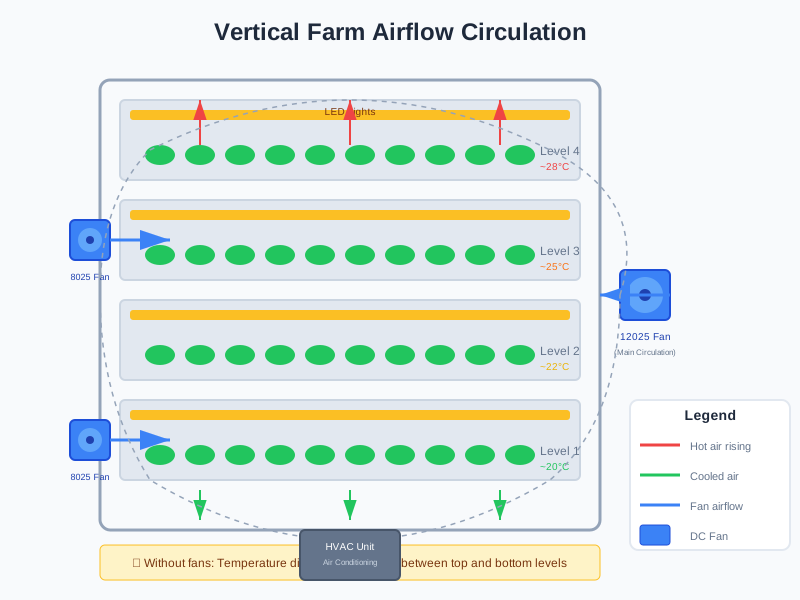
Figure: Airflow circulation pattern in a vertical farm. Red arrows show hot air rising from LED lights, blue arrows show fan-driven airflow, and green arrows show cooled air descending.
Benefits of Cooling Fans in Vertical Farms
1. Uniform Temperature Distribution
Problem: In vertical farms, temperature can vary by 5-10°C between top and bottom levels.
Solution: Axial cooling fans create consistent airflow that: - Eliminates hot spots near LED lights - Distributes cooled air evenly across all growing levels - Maintains optimal temperature ranges (18-27°C for most leafy greens)
Result: Uniform crop growth and consistent harvest quality.
2. Energy Efficiency & Cost Savings
HVAC systems represent the largest operational expense in vertical farming. Strategic fan placement and selection can:
| Metric | Impact |
|---|---|
| Energy Savings | 30-40% reduction in HVAC energy use |
| PUE Optimization | Power Usage Effectiveness improved to 1.1-1.2 |
| ROI Period | 18-24 months for fan system investment |
How Fans Reduce Energy Costs: - Circulate air more efficiently than running compressors at full capacity - Enable heat recovery systems to capture waste heat - Allow zone-based climate control for different crop stages
3. Humidity Control & Disease Prevention
Proper airflow prevents:
- Mold and mildew growth (common in stagnant, humid conditions)
- Condensation on plant leaves and equipment
- Root rot from excess moisture in growing media
Recommended airflow velocity: 0.3-0.5 m/s for leafy greens (source: Danfoss HVAC Guide)
4. CO₂ Distribution
Cooling fans help distribute CO₂-enriched air throughout the growing area, ensuring all plants receive adequate carbon dioxide for photosynthesis. This is especially critical in sealed environments where CO₂ supplementation is used.
5. Extended Equipment Lifespan
Consistent airflow prevents: - LED light overheating (extends lifespan by 20-30%) - Compressor short-cycling - Hot spots that damage sensors and controls
How to Select Cooling Fans for Vertical Farms
Key Selection Criteria
| Factor | Recommendation | Why It Matters |
|---|---|---|
| Fan Size | 120mm-200mm for main areas, 80mm for tight spaces | Larger fans = lower RPM = quieter operation |
| Airflow (CFM) | 50-150 CFM per 100 sq ft growing area | Match to space volume and heat load |
| Static Pressure | 2-5 mmH₂O for ducted systems | Overcome resistance from filters and ducts |
| Noise Level | <35 dB for worker comfort | Lower noise reduces stress on staff |
| Bearing Type | Ball bearing or FDB for 24/7 operation | Longer lifespan (50,000+ hours) |
| Motor Type | EC motor preferred | 30-50% more efficient than AC motors |
Fan Size Selection Guide
Small-Scale Operations (<500 sq ft)
Recommended: MG8025 (80×80×25mm) DC Axial Fans
| Specification | Value |
|---|---|
| Airflow | 24.4-56.2 CFM |
| Static Pressure | Up to 11.4 mmH₂O |
| Speed Range | 2,000-5,000 RPM |
| Best For | Tight spaces, shelf-level cooling |
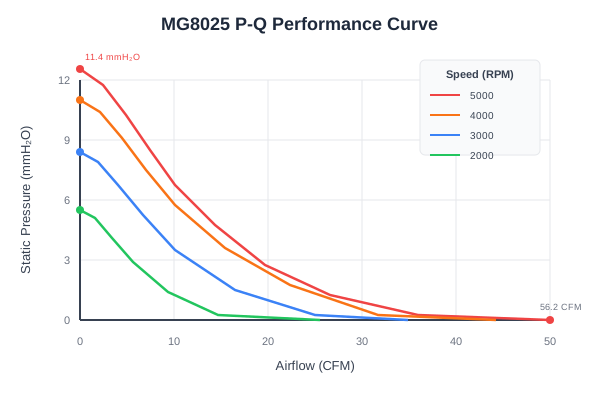
Figure: MG8025 P-Q performance curve at different RPM speeds. Higher RPM delivers more airflow and static pressure.
Use Case: Ideal for individual grow shelves and compact vertical racks where space is limited.
Medium-Scale Operations (500-2,000 sq ft)
Recommended: MG12025 (120×120×25mm) DC Axial Fans
| Specification | Value |
|---|---|
| Airflow | 64.2-151.7 CFM |
| Static Pressure | Up to 4.5 mmH₂O |
| Speed Range | 1,820-3,600 RPM |
| Best For | Main air circulation, HVAC integration |
Use Case: Perfect for central air handling units and primary circulation fans. The larger blade diameter moves more air at lower RPM, reducing noise and energy consumption.
Large-Scale Operations (>2,000 sq ft)
Recommended: MG17251 (172×172×51mm) EC Axial Fans
| Specification | Value |
|---|---|
| Airflow | Up to 860 CFM |
| Voltage | 110V/220V AC |
| Efficiency | EC motor technology |
| Best For | Central HVAC systems, large bays |
Use Case: Designed for industrial-scale vertical farms with high heat loads. EC motors provide 30-50% energy savings compared to traditional AC motors.
Bearing Selection for 24/7 Operation
| Bearing Type | Lifespan | Noise | Best For |
|---|---|---|---|
| Sleeve | ~30,000 hours | Low | Budget projects, horizontal mounting |
| Ball Bearing | ~50,000 hours | Medium | 24/7 operation, all orientations |
| FDB (Fluid Dynamic) | ~50,000+ hours | Very Low | Premium, silent operation |
| Hybrid (HY) | ~40,000 hours | Low | Balance of cost and performance |
Recommendation: For vertical farms with 24/7 operation, ball bearing or FDB fans are essential for reliability and longevity.
PWM Control for Variable Speed
Why PWM Matters: - Adjust fan speed based on real-time temperature readings - Reduce energy consumption during cooler periods - Minimize noise during maintenance hours - Integrate with climate control systems
MG Series PWM Fans support duty cycles from 0-100%, allowing precise speed control.
Installation Best Practices
1. Optimal Fan Placement
[LED Lights] ← Heat Source
     ↓
[Plants] ← Airflow from fans
     ↓
[Cooling Fans] ← Positioned at shelf level
     ↓
[Return Air] ← Back to HVAC
Tips: - Install fans at each growing level to ensure uniform airflow - Position fans to blow across plants, not directly at them - Create a circular airflow pattern to eliminate dead zones
2. Redundancy Planning
For critical operations, install N+1 redundancy: - One backup fan for every 4-5 operational fans - Automatic failover with monitoring sensors - Prevents crop loss during fan failures
3. Maintenance Schedule
| Task | Frequency |
|---|---|
| Visual inspection | Weekly |
| Dust cleaning | Monthly |
| Bearing lubrication check | Quarterly |
| Full system audit | Annually |
Real-World Application
Installation Example
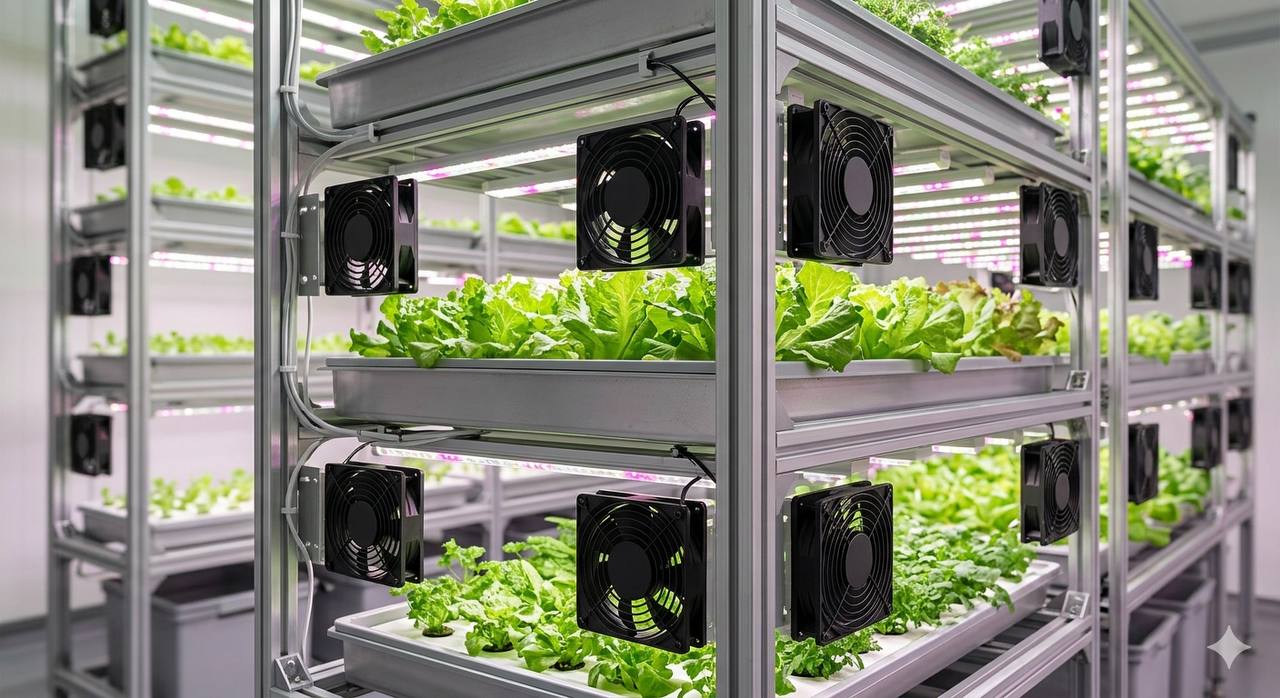
Figure: Multi-level vertical farm with integrated cooling fan system. Note the ventilation ducts on the right side for air circulation.
Case Study: Eliminating Microclimates in High-Density Vertical Farming
Facility Type: Multi-tier hydroponic vertical farm (4,500 sqm) Crops: Butterhead lettuce, sweet basil, microgreens Challenge: 14% crop loss due to tip burn and powdery mildew
The Problem
The facility struggled with inconsistent airflow across tightly spaced cultivation racks. The centralized HVAC system failed to penetrate dense plant canopies, creating stagnant air pockets and high localized humidity (microclimates).
Result: 14% average crop loss rate due to: - Tip burn (caused by poor transpiration) - Powdery mildew outbreaks in inner rows
The Solution: MG8025 DC Axial Fans
Deployment Strategy: - Rack Integration: Four 8025 fans (80×80×25mm) mounted along every 2.5-meter rack section - Continuous Cross-Breeze: Fans configured to push air directly across plant canopy - Hardware Specs: 12V DC models delivering 42 CFM per fan at ~3,500 RPM - Moisture Resistance: IP67-rated conformal coating for 70-80% RH environment
Why MG8025? - ✅ Compact size (80×80×25mm) fits in tight rack spaces - ✅ Adequate airflow (42 CFM) for shelf-level cooling - ✅ Low power draw (~1.8W per unit) for 24/7 operation - ✅ Ball bearing for long lifespan in humid conditions
The Results (90-Day Production Cycle)
| Metric | Before | After | Improvement |
|---|---|---|---|
| Airflow velocity | Stagnant | 0.6-0.9 m/s | Consistent at leaf level |
| Crop loss rate | 14% | 2.1% | 85% reduction |
| Growth cycle | Standard | -1.5 days | Faster harvest |
| Ventilation energy | Baseline | -12% | Net energy savings |
Key Findings: - Anemometer readings confirmed 0.6-0.9 m/s airflow velocity at leaf surface level - Tip burn and powdery mildew incidence dropped drastically - Butterhead lettuce cultivation cycle shortened by 1.5 days due to improved transpiration - Despite running hundreds of fans 24/7, net 12% energy reduction by powering down secondary wall fans
Reference: Based on industry data and MG8025 performance specifications. Airflow velocity range (0.6-0.9 m/s) aligns with research recommendations from University of Arizona and Conviron studies.
Challenge: A 4-level vertical farm experienced temperature differences of up to 8°C between top and bottom growing trays, causing inconsistent crop growth and extended harvest cycles.
Solution: - Installed MG12025 DC axial fans at each level - Integrated with HVAC system for hybrid control - Implemented PWM-based variable speed control
Results: - Temperature difference reduced from 8°C to <2°C - Crop yield uniformity improved by 35% - HVAC energy consumption reduced by 28% - ROI achieved in 14 months
Reference: Based on NCBI research on hybrid temperature control in plant factories.
MEGA Tech Cooling Solutions for Vertical Farms
Recommended Products
| Model | Size | Airflow | Best Application |
|---|---|---|---|
| MG8025 | 80×80×25mm | 24-127 CFM | Individual shelf cooling |
| MG12025 | 120×120×25mm | 64-152 CFM | Main circulation, HVAC integration |
| MG12038 | 120×120×38mm | 63-247 CFM | High-static pressure applications |
| MG17251 | 172×172×51mm | Up to 860 CFM | Large-scale industrial farms |
Why Choose MEGA Tech?
- ✅ ISO 9001:2015 Certified manufacturing
- ✅ CE & RoHS compliant for global markets
- ✅ OEM/ODM capabilities for custom solutions
- ✅ Ball bearing options for 24/7 reliability
- ✅ PWM control support for smart climate systems
- ✅ 13+ years experience in cooling fan manufacturing
Get Started
Ready to optimize your vertical farm's cooling system? Contact MEGA Tech for:
- 📋 Free thermal assessment consultation
- 🔧 Custom fan specifications for your facility
- 💰 Volume pricing for commercial installations
- 🚚 Fast delivery (7-10 business days for samples)
Contact: [email protected]
Website: https://cnmegatech.com
Phone: +86-13570567086
Further Reading
Frequently Asked Questions
What size cooling fan do I need for my vertical farm?
Small operations (<500 sq ft): Use 80mm fans (MG8025) for individual shelf cooling. Medium operations (500-2,000 sq ft): Use 120mm fans (MG12025) for main air circulation. Large operations (>2,000 sq ft): Use 172mm EC fans (MG17251) for industrial HVAC integration.
How much energy can cooling fans save in vertical farms?
Properly designed fan systems can reduce HVAC energy consumption by 30-40%. The NCBI study showed that hybrid control of fans and air conditioning reduced temperature differences by 78.9%, leading to more efficient operation.
What is the ideal temperature range for vertical farms?
Most leafy greens grow optimally at 18-27°C (64-80°F). Precise temperature control with cooling fans ensures uniform growth across all levels and prevents heat stress.
How often should cooling fans run in vertical farms?
For 24/7 operations, fans should run continuously with PWM speed adjustment. During cooler periods, reduce speed to 30-50% to save energy. During LED lighting cycles, increase to 70-100% to manage heat from lights.
What bearing type is best for vertical farm fans?
Ball bearing or FDB (Fluid Dynamic Bearing) are recommended for 24/7 operation. They offer 50,000+ hour lifespan and can operate in any orientation, which is important for shelf-mounted installations.
References
- Danfoss. "Energy-efficient climate control in Vertical Farms." [Online]. Available: https://www.danfoss.com/en/industries/food-and-beverage/dcs/vertical-farming/
- NCBI. "Minimization of Temperature Ranges between the Top and Bottom of an Air Flow Controlling Device through Hybrid Control in a Plant Factory." Journal of Biosystems Engineering, 2014.
- MEGA Tech Product Catalog. DC Axial Fan Specifications. 2026.
Hashtags: #VerticalFarming #IndoorAgriculture #CoolingFans #PlantFactory #SustainableFarming #HVAC #ClimateControl #VerticalFarm #UrbanAgriculture #SmartFarming
💬 Discussions & Feedback
Feel free to ask questions, share your thoughts, or provide feedback in the comments below. If you have any questions about our products or suggestions, please let us know!